
Crimean speedwell
Veronica taurica
Description
Growing requirements
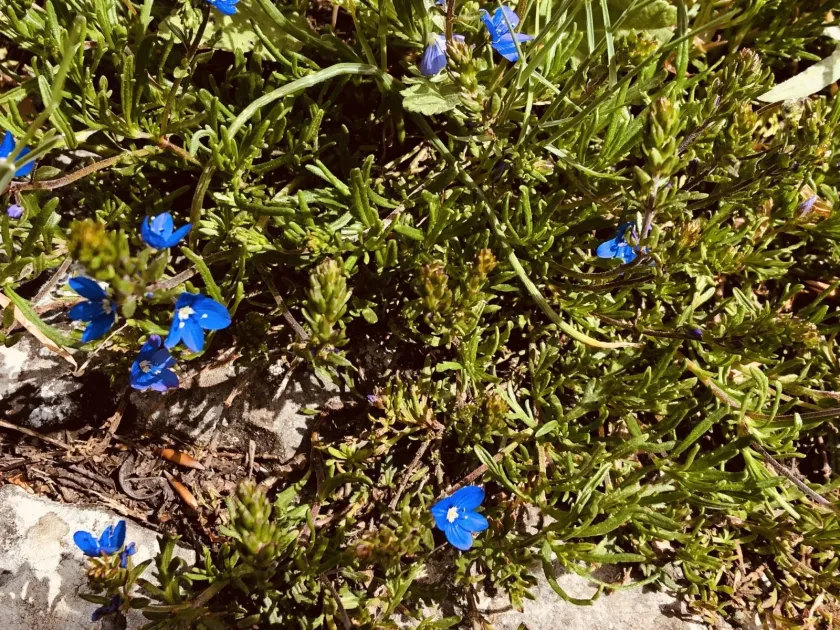
Veronica taurica, known as Crimean speedwell, is a hardy perennial belonging to the Plantaginaceae family. Originally from the Crimean Peninsula, it is well-adapted to rocky habitats, dry steppes, and open, sun-drenched landscapes where soil fertility is relatively low.
The plant thrives in well-drained, porous soils with a neutral or slightly alkaline pH. It is essential to ensure excellent water runoff, as stagnant moisture around the roots is the primary cause of decline for this species, often leading to crown rot in poorly draining conditions.
Botanically, this species is defined by its narrow, linear foliage and elegant, erect spikes of vibrant blue flowers. Its growth habit is compact and mound-forming, making it highly effective for erosion control on slopes and as a structural element in rock garden designs.
In terms of climate requirements, the plant prefers warm, airy conditions. It is remarkably drought-tolerant once established, requiring supplemental water only during prolonged periods of extreme heat or extended drought during its active growth phase in late spring.
Cultural practices include ensuring full sun exposure to maintain the plant's compact form and intense flower coloration. In shady or overcrowded conditions, the stems tend to become leggy, and the overall plant vigor significantly decreases, affecting its aesthetic appeal.
Main diseases and pests
The main threats to Veronica taurica are fungal diseases, primarily powdery mildew and root rot, which are triggered by excessive moisture and poor air circulation. Proper spacing between individual plants is a critical factor in preventing these outbreaks.
Common garden pests such as aphids and leaf-eating beetles may occasionally infest the plants. While the species is generally resilient, monitoring for these pests during early summer is recommended, as they can cause cosmetic damage that weakens the overall vitality of the plant.
Nematodes are another potential threat that can affect the root system, causing stunted growth and yellowing of foliage. To mitigate this risk, gardeners should avoid planting in areas previously contaminated and ensure that only healthy, disease-free stock is introduced to the garden.
Sanitation practices are vital in managing diseases; removing and destroying infected plant tissue promptly prevents the spread of pathogens. Keeping the base of the plant free from damp organic debris also helps in lowering the humidity around the crown.
Winter maintenance involves clearing away dead stalks after the first frost, which reduces the overwintering sites for insects and fungal spores. In very cold climates, a light layer of mulch can protect the root zone from severe freeze-thaw cycles without trapping too much surface moisture.