
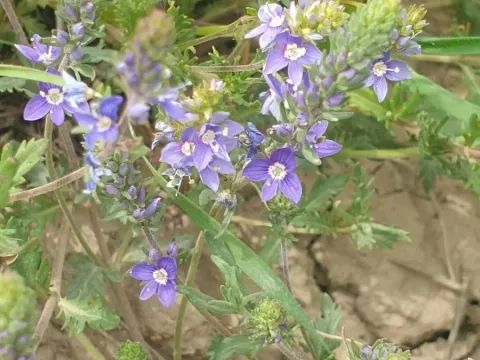
Oriental speedwell
Veronica orientalis
Oriental speedwell (Veronica orientalis) is a member of the Plantaginaceae family. This perennial herb is widely valued for its hardiness and its ability to serve as a ground cover in various landscape settings.
What the section contains
Oriental speedwell
Propagation is typically achieved through seeds, which are sown either in late autumn for natural stratification or in early spring after chilling requirements are met.
Seeds should be sown on the soil surface or covered with a very thin layer of substrate, as they require light for optimal germination. Consistent moisture is crucial during the initial stages of establishment.
If started indoors, seeds should be sown in modular trays approximately 8-10 weeks before the last frost date, ensuring adequate light exposure for young seedlings.
Transplanting into the field is recommended when plants have developed at least two true leaves and the risk of heavy frost has completely passed.
This species thrives in sunny locations with well-draining soil. It is highly adaptable and performs well in sandy, rocky, or gravelly substrates that prevent waterlogging.
Oriental speedwell is remarkably drought-tolerant once established. It does not require intensive irrigation, making it suitable for low-maintenance agricultural or landscaping projects.
Soil pH should ideally be neutral or slightly alkaline. While the plant can tolerate poor soil, periodic application of balanced fertilizer can promote more vigorous flowering.
Weed control is essential during the early stages of growth, as the plant can be easily suppressed by fast-growing weeds until it develops a dense mat.
Maintenance practices include shearing the plants back after the primary flowering period, which encourages a tidy appearance and potential secondary bloom in the autumn.
Powdery mildew is the most common fungal disease, especially in areas with high humidity and poor air circulation. Proper spacing between plants is the best preventive measure.
Root rot can occur if the plant is grown in heavy, poorly drained soil that remains constantly damp. Ensuring a good drainage system is critical for plant longevity.
Aphids can occasionally infest the flower spikes during the peak growing season. Their feeding can distort new growth and reduce the overall aesthetic value of the planting.
To manage pests, integrated pest management techniques are recommended, including the use of insecticidal soaps or horticultural oils if infestations become significant.
Regular monitoring of the foliage for spots or discoloration allows for early intervention, preventing the spread of diseases across the field or garden plot.