
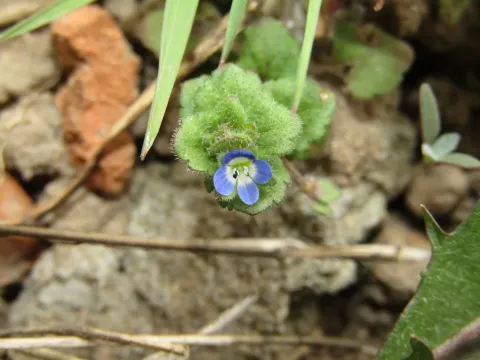
Opacous speedwell
Veronica opaca
Veronica opaca is a small annual herbaceous plant, a member of the Plantaginaceae family. In agricultural landscapes, it typically behaves as a winter annual, germinating in the autumn and overwintering as a small rosette of leaves.
What the section contains
Opacous speedwell
The lifecycle of this species is synchronized with autumn-sown cereals. Seedlings emerge during the cooler months, rapidly establishing a root system before the onset of winter frost, which allows them to resume growth immediately in early spring.
Flowering usually occurs in the spring, followed by seed maturation before the harvest of winter crops. The plant is prolific, producing numerous seeds that can persist in the soil seed bank for several years under appropriate conditions.
Management of the sowing schedule for agricultural crops can influence the density of this weed. Early planting of winter cereals may lead to higher infestation levels if the soil is not properly tilled before sowing.
Understanding the germination pattern is crucial for farmers; post-harvest stubble management and autumn cultivation are key tactics to disrupt the lifecycle of Veronica opaca before the main crop reaches its critical development stages.
This species thrives in fertile, well-drained soils, often appearing in fields with high agricultural input. It prefers soils with a neutral pH, and its presence is frequently observed in loamy or silt-rich environments.
Veronica opaca is moderately demanding of soil moisture. It is most successful in regions with temperate climates where moderate rainfall persists throughout the growing season, preventing the soil from drying out excessively.
Light availability is a primary driver of the plant's growth. Being low-growing, it is highly sensitive to competition for sunlight; therefore, healthy, dense stands of crops serve as a natural biological control against its proliferation.
Nutrient status of the field also plays a role in its success. High nitrogen availability in the soil can favor the rapid expansion of its leaf rosettes, allowing the weed to compete more effectively with the crop.
Cultural practices, such as crop rotation, are essential. Rotating winter cereals with spring-sown crops allows for different mechanical and chemical intervention strategies that prevent the buildup of Veronica opaca populations over time.
The primary agricultural threat posed by this plant is its ability to compete for resources, which reduces the yields of grains and legumes. It effectively occupies space in the lower canopy, absorbing nutrients and water intended for the crop.
While not a primary host for major economic pests, it can act as a secondary host for various insects and pathogens. This allows certain pests to survive in the field margins or within crop rows, complicating integrated pest management.
Chemical control remains the most widespread approach for managing this weed. Selective herbicides targeting broad-leaved weeds in cereal crops are commonly used, though applications must be timed to the weed's rosette stage for maximum effectiveness.
Fungal pathogens like powdery mildew can occur on the foliage of Veronica opaca. While these diseases might occasionally limit weed growth, they also represent a potential reservoir for pathogens that can infect sensitive crop varieties.
Mechanical cultivation remains an effective non-chemical option. Inter-row cultivation in row crops, or the use of light harrows in cereal stands during early spring, can significantly reduce the weed population if performed at the correct growth stage.