
Ourisia macrophylla
Ourisia macrophylla
Description
Growing requirements
Ourisia macrophylla is a perennial herbaceous plant belonging to the Plantaginaceae family. Native to New Zealand, this plant is primarily found in high-altitude regions, where it thrives in cool, moist habitats such as streamsides, damp meadows, and forest understories.
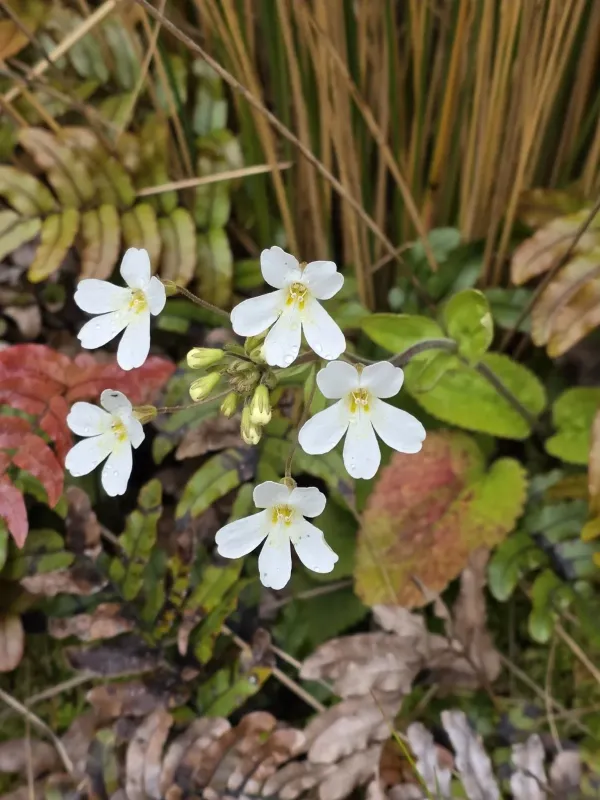
The plant is defined by its large, leathery, and dark green leaves that form basal rosettes. During the flowering season, it produces tall spikes covered in white, tubular flowers, providing a distinct ornamental appeal that makes it a prized specimen for specialized garden collections.
For successful cultivation, the plant requires a climate that mimics its cool, alpine origin. It is highly sensitive to heat and direct summer sunlight, necessitating placement in cool, shaded areas of the garden where the temperature remains stable and the humidity is consistently high.
The soil should be rich in organic matter and possess an excellent moisture-retaining capacity while remaining well-drained. It thrives best in soils that are slightly acidic to neutral. Constant monitoring of soil moisture is essential, as the plant cannot tolerate long periods of drought.
In terms of хозяйственного (utilitarian) use, Ourisia macrophylla is used in landscape architecture to populate north-facing borders, rock gardens, and forest-style landscapes. It spreads via rhizomes, making it effective for creating dense, evergreen, or semi-evergreen foliage cover in moist shady corners.
Main diseases and pests
The primary threats to the health of the plant include root rot and fungal infections, typically induced by stagnant water in the root zone or poorly drained soil. When soil conditions become anaerobic, the root system fails quickly, leading to total plant collapse.
Slugs and snails are the most frequent pests affecting the foliage of Ourisia macrophylla. In humid environments, which the plant favors, these pests can thrive, leading to significant leaf damage that necessitates physical removal or organic control measures to preserve plant health.