
Ourisia caespitosa
Ourisia caespitosa
Description
Growing requirements
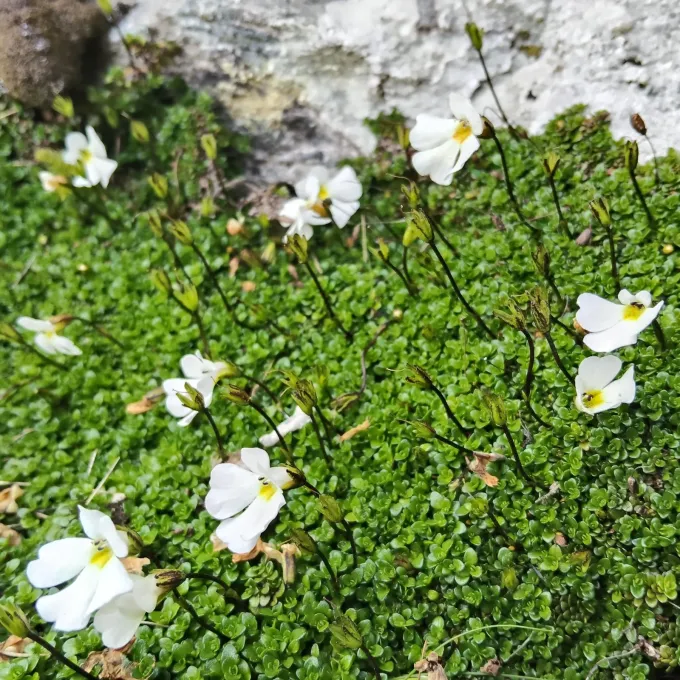
Ourisia caespitosa is a low-growing perennial herbaceous plant belonging to the Plantaginaceae family. Native to the alpine regions of New Zealand, this species is well-adapted to high-altitude environments characterized by rocky soils and temperate, moist conditions.
The plant grows in dense, mat-forming cushions or carpets, which helps it withstand harsh mountain winds and cold temperatures. The leaves are small, rounded, and arranged in an overlapping fashion, creating a texture that is highly valued in botanical gardening.
To cultivate Ourisia caespitosa successfully, one must replicate its natural habitat. It requires a cool environment with consistent moisture and protection from intense, direct summer heat. Partial shade is essential to prevent leaf scorching and desiccation of the shallow root system.
The soil should be well-drained, porous, and slightly acidic. Incorporating organic matter into a gritty or gravelly substrate helps maintain the necessary moisture levels while ensuring that oxygen reaches the roots, which is crucial for healthy development.
In landscaping, this species is primarily used for rock gardens, trough gardens, and alpine collections. It serves as an excellent ground cover for damp, rocky areas where other plants might struggle to establish their root systems.
Main diseases and pests
The most significant threats to the health of Ourisia caespitosa involve root and crown rot, which are often exacerbated by poor drainage and stagnant water. Overwatering during cooler months can lead to rapid decay of the tightly packed foliage.
Slugs and snails are the most common pests, as they are attracted to the succulent-like foliage of the plant. Regular monitoring is recommended to mitigate the risk of severe damage during the active growing season.