
Mouse-tail plantain
Plantago myosuros
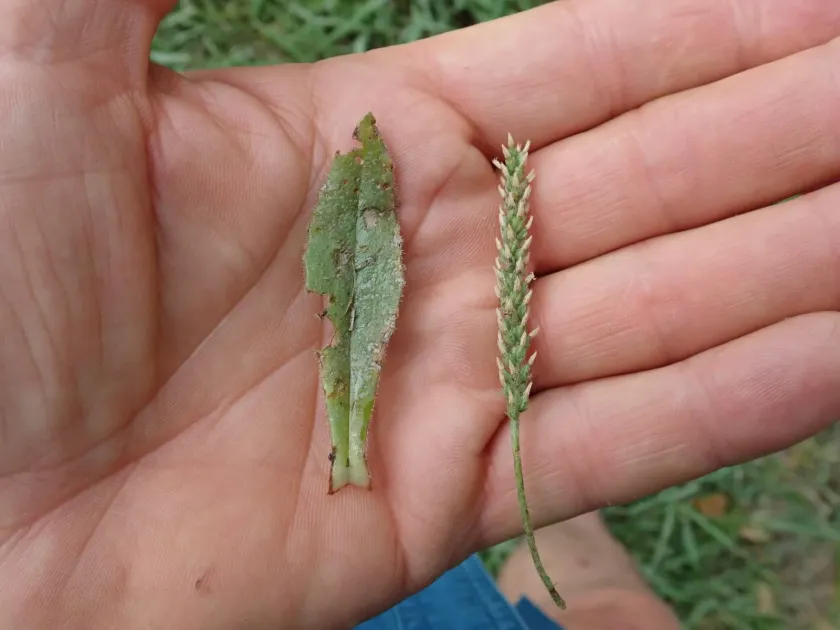
Description
Sowing dates
Sowing of mouse-tail plantain is typically carried out in early spring once soil temperatures reach 8–10 degrees Celsius. Early planting allows the crop to establish a strong root system before the onset of summer heat.
Seeds of this species exhibit dormancy, which necessitates pre-sowing stratification to ensure uniform germination. Planting is recommended in rows spaced 45–60 centimeters apart to facilitate mechanical weeding and crop maintenance.
Seeds should be planted at a shallow depth of 1–2 centimeters, as they are very small and require proximity to the surface for successful sprout emergence. The soil should be gently compacted after sowing to ensure optimal seed-to-soil contact.
Winter sowing is also feasible, which can result in earlier spring growth, although it requires careful site preparation to prevent waterlogging and seed damage during cold periods.
The seeding rate is generally 2–4 kilograms per hectare, depending on seed viability. Achieving a uniform distribution of seeds across the field is crucial to avoid overcrowding and ensure efficient resource use.
Growing requirements
Mouse-tail plantain is a member of the Plantaginaceae family and thrives in well-lit, open fields. It is a heliophilic plant, meaning it requires significant sun exposure to achieve optimal growth and secondary metabolite production.
The crop prefers light, well-draining soils, such as sandy loams or loams with a neutral pH. Proper soil structure is essential for root development and nutrient uptake, making light tillage a recommended practice.
Although the plant is resilient, it requires moderate soil moisture throughout the growing season. Excessive irrigation or waterlogged fields must be avoided, as these conditions significantly increase the risk of root rot and foliage disease.
Soil fertility can be enhanced through the incorporation of organic matter, such as well-composted manure, before planting. This practice improves soil texture and provides a steady supply of nutrients for the crop.
The temperature range of 18–25 degrees Celsius is ideal for active vegetation. During periods of drought, supplemental irrigation is necessary to maintain biomass production and the overall quality of the leaves.
Yield
The yield of green biomass for mouse-tail plantain typically ranges from 15 to 20 metric tons of dry material per hectare under proper management. Productivity is highly dependent on the quality of agronomic practices and environmental factors.
Optimal yields are generally reached in the second year of cultivation, once the plant has fully developed its basal rosette. Managing the crop to encourage repeat harvesting is a key component of a successful agricultural strategy.
Nutrient management, particularly the application of nitrogen and potassium, plays a vital role in biomass production. Balanced fertilization encourages rapid leaf regrowth after mowing, allowing for multiple harvests per season.
The density of planting also affects overall production levels. Proper spacing ensures that each plant has sufficient access to light and nutrients, which minimizes competition and maximizes individual plant health.
Yield variations can occur based on climatic conditions. Implementation of modern irrigation systems helps stabilize production levels even in seasons with lower rainfall, ensuring consistent output for processors.
Main diseases and pests
The main threats to mouse-tail plantain are fungal infections, particularly powdery mildew, which can thrive in humid and poorly ventilated fields. Good air circulation between rows is essential for disease prevention.
Pests, including aphids and various weevils, can damage foliage and stems, affecting both the yield and the quality of the raw material. Monitoring for these pests in the early growth stages is critical.
Integrated pest management, including crop rotation and the use of resistant varieties, is the preferred approach for control. Avoiding the same field for consecutive plantings reduces the buildup of soil-borne pathogens.
Biological control measures, such as the introduction of natural predators, can effectively manage pest populations without the need for synthetic chemicals, ensuring a higher quality final product.
Timely weeding and proper sanitation of the field are essential practices to minimize the spread of diseases. Removing infected plant parts promptly can help contain outbreaks and protect the rest of the crop.
Harvesting
Harvesting is conducted during the full flowering stage, as this is when the concentration of medicinal compounds in the leaves is at its peak. Mechanical mowing is generally used, set to a height that preserves the crown of the plant.
Post-harvest handling is critical, and the material should be transported to drying facilities without delay. Preventing the heating and decay of green material is essential for maintaining high-quality standards.
Drying is performed in controlled environments with temperatures not exceeding 50 degrees Celsius. This carefully regulated process ensures that the active biological ingredients are preserved effectively.
The dried product is sorted to remove foreign matter and impurities. A high-quality batch should be brittle, show good color, and be entirely free of mold or pest-related degradation.
Storage requires a cool, dry, and dark environment to prevent degradation. Using airtight containers protects the material from moisture and pests, extending its shelf life significantly until it is ready for further processing.