
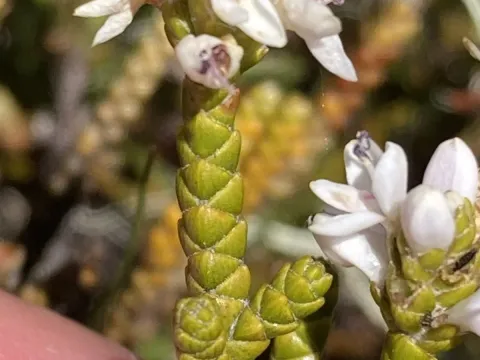
Veronica lycopodioides
Veronica lycopodioides
Veronica lycopodioides is a distinctive, slow-growing evergreen subshrub belonging to the Plantaginaceae family, native to the alpine environments of New Zealand.
What the section contains
Veronica lycopodioides
This species is highly valued in horticulture for its foliage, which bears a striking resemblance to club moss, forming dense, compact, and scaly cushions.
Optimal growth requires a sunny position with well-drained, gritty, and mineral-rich soil that mimics its native high-altitude stony habitats.
Providing excellent air circulation is critical, as stagnant humidity around the crown can lead to fungal issues and premature dieback of the foliage.
In garden applications, it is an ideal candidate for rock gardens, trough plantings, and alpine borders where it can slowly spread without becoming invasive.
Root rot is the most significant threat to this culture, typically caused by waterlogged substrates or heavy, poorly draining clay soils.
Powdery mildew can occasionally affect the plant during periods of high humidity and poor airflow, leaving a white dust-like coating on the foliage.
Spider mites are a common pest problem, especially in dry, sheltered conditions, causing the scale-like leaves to lose their vibrant green color.
Slugs and snails may target new growth during the spring, requiring the use of physical barriers or targeted pest control measures.
Preventive maintenance involves removing dead plant debris and ensuring that the base of the plant remains dry and free of organic mulch.