
Veronica ochracea
Veronica ochracea
Description
Growing requirements
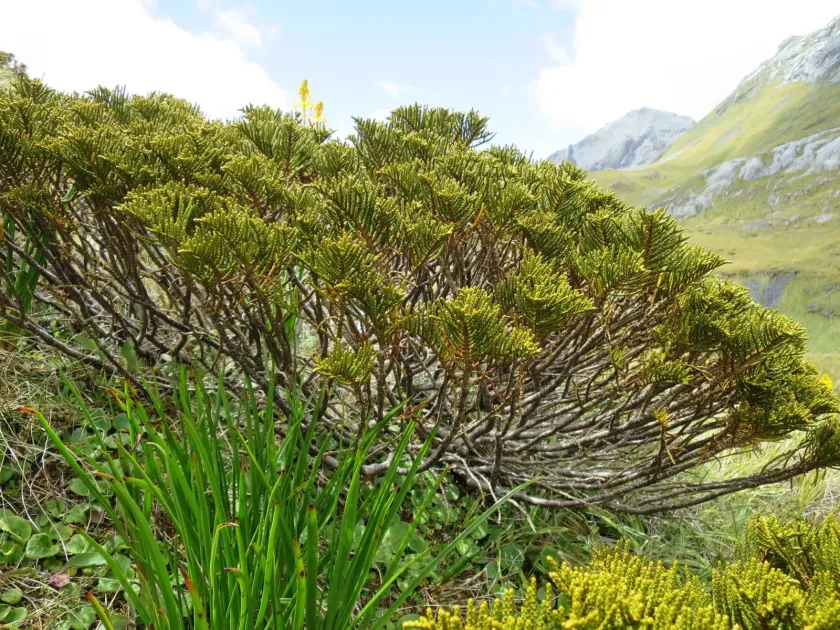
Veronica ochracea is a fascinating perennial herb belonging to the Plantaginaceae family. Originating from the mountainous regions of New Zealand, this plant has adapted to harsh alpine conditions, resulting in a unique, compact growth habit that resembles a miniature conifer.
The plant features woody, upright stems covered in tiny, scale-like leaves. This structure gives it a distinctive evergreen look, which remains decorative throughout the year. Its pale yellow to ochre flowers emerge in short, terminal racemes during the early summer months.
To cultivate Veronica ochracea successfully, one must provide excellent soil drainage. It thrives in gritty, sandy, or rocky soils that do not hold excess water. Heavy, clay-based soils should be avoided or significantly amended to prevent root suffocation.
It requires a sunny location to maintain its tight, cushion-like shape. In partial shade, the stems tend to stretch and lose their characteristic density, making the plant less attractive. It is generally hardy, though it prefers regions with cool, well-ventilated summers.
In terms of practical application, it is highly valued in horticulture for rock gardens and trough gardening. Its ability to thrive in poor soils makes it an excellent choice for xeriscaping, where it adds unique texture and color to stone-heavy landscapes.
Main diseases and pests
The most common cause of decline in Veronica ochracea is overwatering or stagnant moisture. Root rot is a significant threat; therefore, planting on a slight slope or in a raised bed is recommended to ensure water runs away from the base of the plant.
Slugs and snails can pose a problem in humid environments, particularly in spring. They feed on the foliage, which can mar the plant's appearance. Barriers such as crushed eggshells or environmentally friendly bait can be used for control.
Fungal diseases like leaf spot may occur if air circulation is insufficient. Ensuring proper spacing and keeping the foliage dry are key preventative measures against most fungal pathogens that affect this species.
Winter wetness is more damaging to this plant than extreme cold. The crown of the plant must be protected from prolonged contact with wet, freezing ground, often managed by using a gravel mulch around the base.
Regular maintenance involves checking for dead material after winter. Cleaning out debris from within the cushion prevents moisture buildup and encourages new growth during the spring season.