
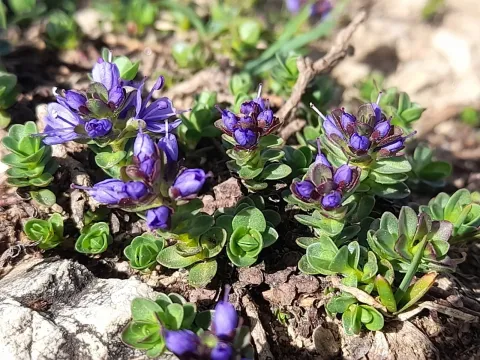
Veronica nummularia
Veronica nummularia
Veronica nummularia is a low-growing perennial herbaceous plant belonging to the Plantaginaceae family, known for its compact habit and resilience.
What the section contains
Veronica nummularia
Native to the high-altitude regions of the Pyrenees, this species has evolved to survive in challenging rocky environments and mountain crevices.
The crop thrives in well-drained, gritty, and moderately moist soils with a neutral to slightly acidic pH, mirroring its natural mountain habitat requirements.
Botanically, it is defined by its small, rounded leaves that resemble coins, arranged in dense mats that rarely exceed a height of 5 to 10 centimeters.
In terms of practical use, it is predominantly utilized in ornamental horticulture as an alpine ground cover for rock gardens and crevices where hardiness is required.
Excessive soil moisture is the primary threat to Veronica nummularia, as it often leads to root rot and poor vitality in otherwise healthy specimens.
Powdery mildew represents a significant fungal risk, particularly when plants are grown in overcrowded conditions with poor air circulation.
Common pests such as aphids and spider mites can occasionally affect the foliage, especially during hot, dry spells that stress the plants.
Effective management includes providing excellent drainage and spacing plants properly to ensure adequate airflow and sunlight exposure.
Integrated pest management strategies involve monitoring for signs of infestation and applying targeted controls only when biological thresholds are exceeded.