
Russelia
Russelia Jacq.
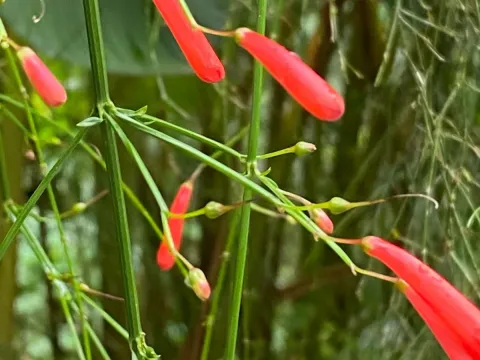
Russelia (Russelia Jacq.) is an ornamental genus within the Plantaginaceae family. Originally native to the tropical landscapes of Mexico and Central America, this plant is recognized for its unique, fountain-like growth habit and vibrant, tube-shaped red flowers.
What the section contains


Russelia
The plant thrives in bright, indirect sunlight or full sun exposure, provided the temperatures are maintained within a tropical range. In cooler climates, it is widely utilized as a hanging basket specimen or a greenhouse plant to ensure its protection from frost.
Cultivation requires a well-draining, lightweight potting mix. The root system is particularly sensitive to waterlogging, making proper drainage essential to prevent physiological stress and promote healthy nutrient uptake during the active growing season.
Optimal growth occurs at temperatures between 20°C and 25°C. During the dormant period, it is crucial to keep the plant in a bright location with temperatures above 10°C to maintain plant vigor and prevent premature foliage shedding.
Agrotechnical care involves consistent but moderate watering. Fertilizer applications should focus on high-potassium formulations during the spring and summer months to support the development of extensive flowering stems and to enhance the overall aesthetic appeal.
The most common pests affecting Russelia are spider mites and mealybugs. These organisms typically thrive in environments with low humidity or stagnant air circulation, which are common issues in indoor or greenhouse settings.
Fungal diseases, primarily root rot and stem decay, often result from excessive moisture and poor soil aeration. These conditions create a favorable environment for pathogens to colonize the root zone and compromise the plant's structural integrity.
Management of pest populations requires the targeted application of insecticides or acaricides. Due to the fine-textured foliage of the plant, thorough coverage is necessary to ensure the eradication of pests hiding within the dense growth.
Sanitation practices, such as the pruning of necrotic or overcrowded stems, are vital to maintaining plant health. Regular pruning facilitates airflow, reducing the humidity levels around the foliage and significantly lowering the risk of fungal infections.
Preventive measures include the inspection of new nursery stock and maintaining a consistent microclimate. Avoiding overhead irrigation when humidity is high further helps in preventing leaf and stem surface infections.