
Sardinian plantain
Plantago sarda
Description
Growing requirements
Sardinian plantain (Plantago sarda) is a perennial herbaceous plant belonging to the Plantaginaceae family. It is an endemic species native to the islands of Sardinia and Corsica, thriving in rugged Mediterranean environments.
This species is highly adapted to nutrient-poor, rocky, and sandy soils. It requires full sunlight exposure to maintain its compact growth form and vigor, making it an excellent candidate for specialized rock gardening and xeriscaping.
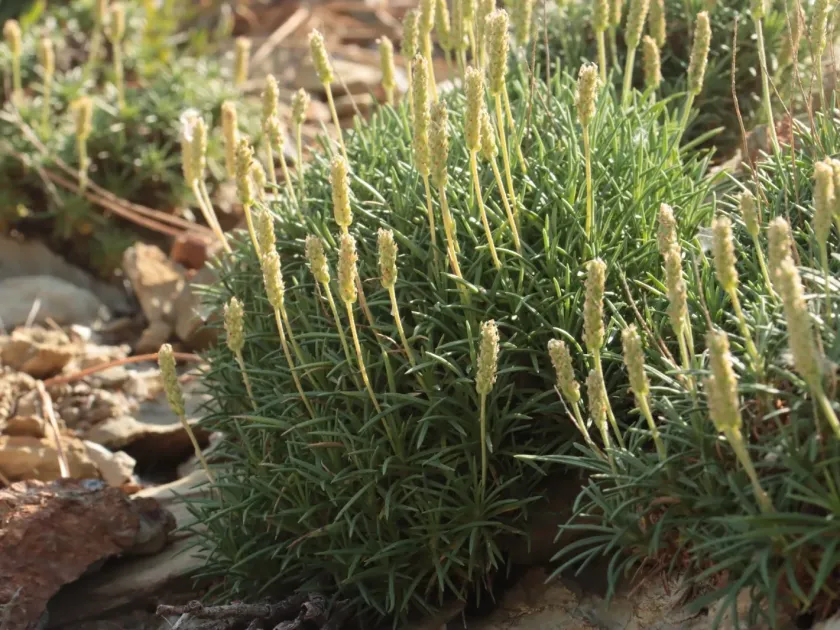
Botanically, it forms dense, low-growing rosettes of lanceolate leaves. Its root system is specifically adapted to secure the plant within crevices, allowing it to survive in harsh rocky terrain where other vegetation might struggle.
Cultivation requires strict management of soil drainage. Plantago sarda is intolerant to waterlogged soils, which can lead to rapid root degradation. Careful monitoring of watering frequency is essential for successful growth.
In terms of хозяйственного (agricultural/horticultural) use, the plant is primarily utilized as a decorative groundcover. Its ability to create dense, low mats makes it a valued specimen for rock gardens and miniature landscaping projects.
Main diseases and pests
The most common health issues for Sardinian plantain include root rots triggered by excessive soil moisture and poor drainage. Ensuring a well-draining substrate is the primary preventive measure against fungal pathogens.
Pests that may impact the health of the plant include aphids and leaf-eating caterpillars. Integrated pest management, including regular inspection and the use of targeted insecticides, is recommended to protect the integrity of the rosettes.
Weed competition is a significant concern during the initial establishment phase of the plant. Because of its relatively slow growth habit, regular hand-weeding is necessary to prevent it from being overwhelmed by more aggressive species.
Under glasshouse or indoor conditions, powdery mildew can emerge if ventilation is inadequate. Maintaining high airflow is essential to keep the foliage dry and healthy throughout the year.
Environmental stressors, particularly extreme winter frost without snow cover, can cause significant damage to the crown of the plant. In colder regions, providing winter protection or moving the plants to a sheltered area is standard practice.