
Lemoine's firecracker plant
Russelia x lemoinei Burgerstein & F. Abel
Description
Growing requirements
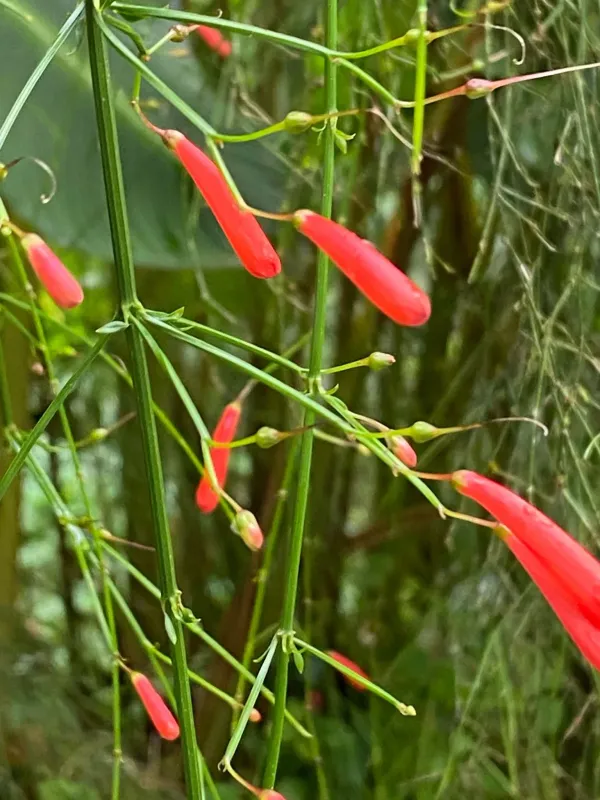
Lemoine's firecracker plant (Russelia x lemoinei) is a decorative hybrid shrub belonging to the Plantaginaceae family. Created as a cross between different Russelia species, it is prized for its cascading habit and intense, tubular red flowers that create a spectacular visual display, resembling a floral fountain.
Botanically, this cultivar is characterized by its slender, rush-like stems which are almost leafless, covered instead by tiny, inconspicuous scale-like leaves. The plant demonstrates high vigor, often reaching significant lengths in its weeping stems, making it an ideal choice for hanging baskets and elevated containers.
Climatic requirements focus on heat and high light intensity. Being a tropical plant, it thrives in environments that mimic its native habitat. It requires full sunlight to bloom successfully, as diminished light levels lead to poor stem structure and a significant reduction in the quantity of its signature flowers.
The soil should be well-draining, nutrient-rich, and slightly acidic to neutral. Peat-based mixes with added perlite are generally recommended to provide the necessary structure for healthy root development. It is essential to ensure that the container has adequate drainage holes to prevent the accumulation of excess moisture.
Agrotechnical care involves consistent moisture levels during the growing season combined with periodic fertilization. Liquid fertilizers high in phosphorus are beneficial for promoting continuous bloom. During the winter, the plant requires a dormant period with reduced watering to prevent root rot and physiological stress.
Main diseases and pests
The most common pests affecting this plant are spider mites and mealybugs, which tend to infest the plant when kept in dry indoor conditions. Regular misting of the foliage and maintaining a clean growing environment are essential preventative measures to avoid heavy infestations and subsequent plant damage.
Root rot, specifically caused by Pythium or Phytophthora species, remains the most significant threat to the survival of the plant. Overwatering or using a heavy, non-porous soil medium creates an anaerobic environment that fosters these pathogens, eventually leading to the collapse of the plant's vascular system.