
Russelia sarmentosa
Russelia sarmentosa Jacq.
Description
Growing requirements
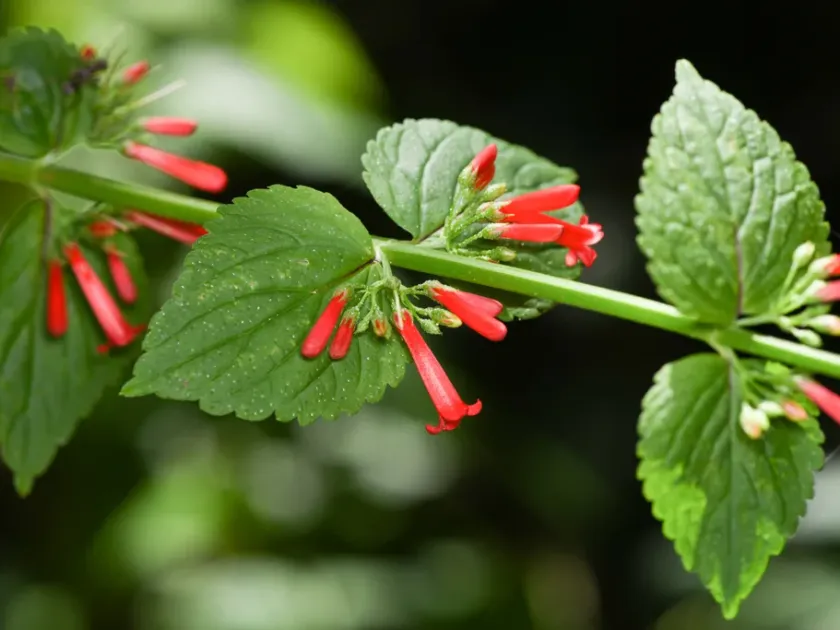
Russelia sarmentosa is a perennial semi-shrub belonging to the Plantaginaceae family, native to the tropical regions of the Americas. It is highly valued in horticulture for its cascading growth habit and delicate, long, drooping stems.
The plant features small, simple leaves arranged along slender, arching branches. These stems are distinctive for their structure, which allows them to drape gracefully over containers, hanging baskets, or rock garden walls.
To cultivate this species effectively, growers must provide well-draining soil that is rich in organic matter. A sandy loam mix is ideal to ensure that roots are adequately aerated while maintaining consistent, moderate moisture levels.
The plant thrives in warm, humid conditions with temperatures typically ranging between 20°C and 28°C. While it prefers bright, indirect sunlight, it can tolerate partial shade, though excessive shade may result in fewer blooms and weaker stems.
Agronomic management involves regular pruning to maintain the plant's shape and encourage denser growth. Fertilization should be applied during the growing season using a balanced fertilizer to support continuous development and overall plant health.
Main diseases and pests
Common pests affecting Russelia sarmentosa include spider mites and mealybugs, which thrive in environments with low humidity and poor air circulation.
Root rot is the most significant disease threat, typically caused by waterlogged soil conditions. Implementing proper drainage and avoiding overwatering are the primary cultural practices to prevent this issue.