
Scardica speedwell
Veronica scardica
Description
Growing requirements
Veronica scardica, commonly known as Scardica speedwell, is a herbaceous perennial plant belonging to the Plantaginaceae family. It is recognized for its ability to thrive in aquatic and semi-aquatic environments, making it a specialized plant for moist habitats.
Originating primarily from the Balkan Peninsula and parts of Southern Europe, this species is naturally found in riparian zones, wet meadows, and areas with high water tables. It is adapted to survive where other terrestrial plants might suffer from excessive moisture.
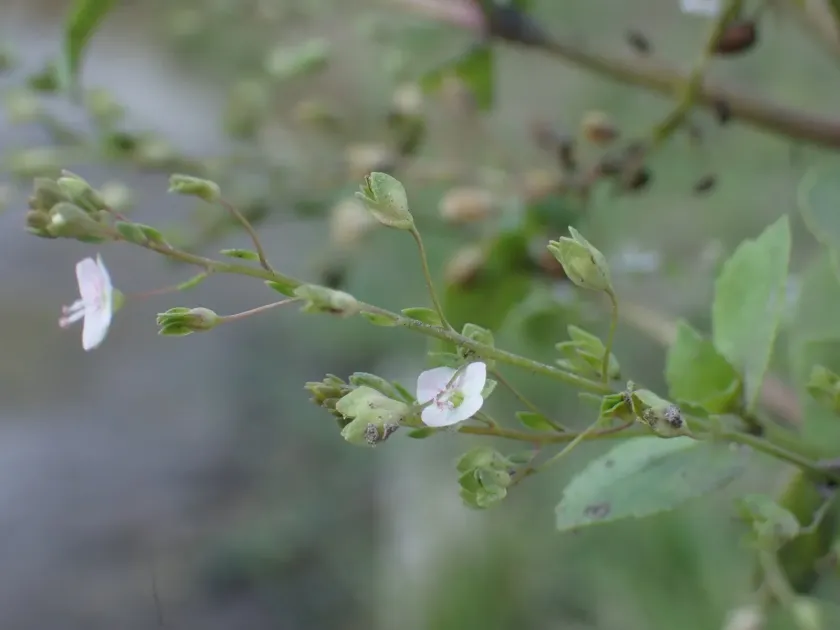
The botanical structure of the plant features decumbent or ascending stems that can root at the nodes. The leaves are typically opposite and smooth, while the inflorescences are axillary racemes, producing small, delicate flowers that bloom throughout the warmer months.
Cultivation requirements focus on maintaining high soil moisture and providing nutrient-rich, organic-heavy substrates. The species prefers full sun exposure but requires a consistent supply of water to prevent dehydration during peak temperatures, as its root system is not adapted to dry soil.
Its primary agricultural and ecological use includes stabilizing banks of small ponds or ditches. In garden settings, it serves as a robust ground cover for bog gardens or wetland areas, providing both aesthetic value and soil erosion protection.
Main diseases and pests
Key diseases affecting Scardica speedwell include fungal pathogens such as downy mildew and rust, which thrive in stagnant air and overly humid conditions. Prevention involves maintaining good air circulation around the plants.
Typical pests include aphids, which often colonize the succulent tips of the stems, and spider mites in slightly drier conditions. Snails and slugs are also a persistent threat to the foliage in damp, sheltered areas, often causing significant aesthetic damage to the plant.