
Firecracker plant
Russelia equisetiformis Schltdl. & Cham.
Description
Growing requirements
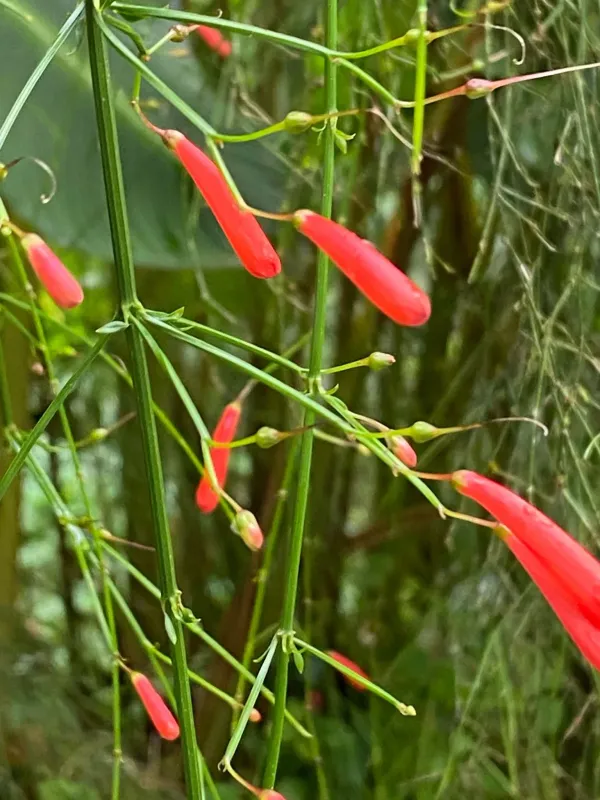
The firecracker plant (Russelia equisetiformis) is a perennial subshrub belonging to the Plantaginaceae family. Originally from Mexico and Guatemala, it is widely recognized for its arching, leafless green stems that create a weeping, fountain-like appearance.
Botanically, the plant is adapted to rocky environments. Its modified leaves are tiny scales, which helps the plant reduce transpiration and thrive in high-light conditions. The flowers, shaped like small tubes, are bright red and attract pollinators throughout the blooming season.
For cultivation, the plant requires well-draining, sandy or loamy soil. It thrives in full sun but can tolerate partial shade, provided it has enough light to support its dense, photosynthetic stems. Overcrowding should be avoided to ensure proper airflow.
Climate requirements include tropical or subtropical conditions. It is not frost-tolerant and must be protected or brought indoors when temperatures approach freezing. Consistent moderate moisture during the growing season is essential for vigorous development.
In landscaping, it is used extensively in hanging baskets, rock gardens, and as a groundcover in frost-free regions. Its ability to create long, cascading stems makes it a versatile choice for vertical design and aesthetic architecture.
Main diseases and pests
Common pests include spider mites and mealybugs, which often appear when the plant is kept in dry indoor environments with poor air circulation. Regular inspection and the application of horticultural soap or systemic treatments are recommended.
Root rot is the most significant disease threat to Russelia equisetiformis. This is almost exclusively caused by overwatering or poor drainage. Ensuring that the soil dries out slightly between watering sessions is the best preventative practice.