
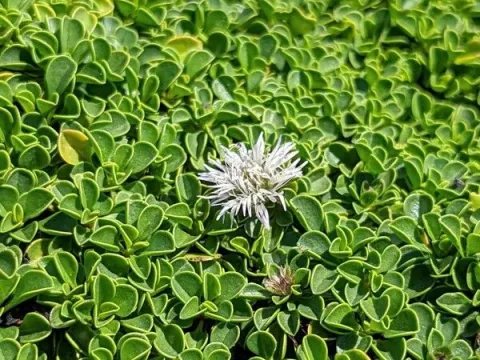
Globularia stygia
Globularia stygia
Globularia stygia is a resilient herbaceous perennial belonging to the Plantaginaceae family. It is native to specific mountainous regions, primarily located in the Mediterranean, where it grows in rocky crevices and limestone environments.
What the section contains
Globularia stygia
The plant is highly valued for its distinctive aesthetic, featuring compact, mat-forming foliage and striking globe-shaped, azure-blue flower heads. Its botanical structure is adapted to harsh conditions, including nutrient-poor soils and strong winds.
For successful growth, this species requires a location with full sun exposure. Adequate light is essential to maintain the dense, cushion-like habit that defines its ornamental value; otherwise, it becomes sparse and prone to weakness.
Soil requirements focus primarily on drainage. The substrate should be gritty, alkaline, and lean. Heavy, moisture-retentive soils must be avoided as they lead to rapid root decay, which is the primary cause of plant failure in garden settings.
The plant is drought-tolerant once established. Supplemental irrigation should only be provided during prolonged heatwaves or during the initial establishment period in the first growing season after planting.
Root rot caused by stagnant water is the most significant threat to the health of Globularia stygia. Ensuring high porosity of the growing medium is the most effective preventative measure against fungal infection.
Occasionally, foliage may attract aphids or spider mites, especially if the plant is stressed by lack of airflow or improper humidity. Integrated pest management, focusing on early detection and spot treatment, is recommended for maintaining healthy specimens.