
Grey field-speedwell
Veronica polita
Description
Growing requirements
Grey field-speedwell (Veronica polita) is a member of the Plantaginaceae family. It is an annual herbaceous plant widely recognized as a problematic agricultural weed that infests various field crops, including winter cereals and vegetables.
The plant originates from Eurasia and has successfully spread to many parts of the world with temperate climates. It thrives in moist, fertile soils and is frequently found in cultivated fields, gardens, and disturbed habitats where it can access high levels of nutrients.
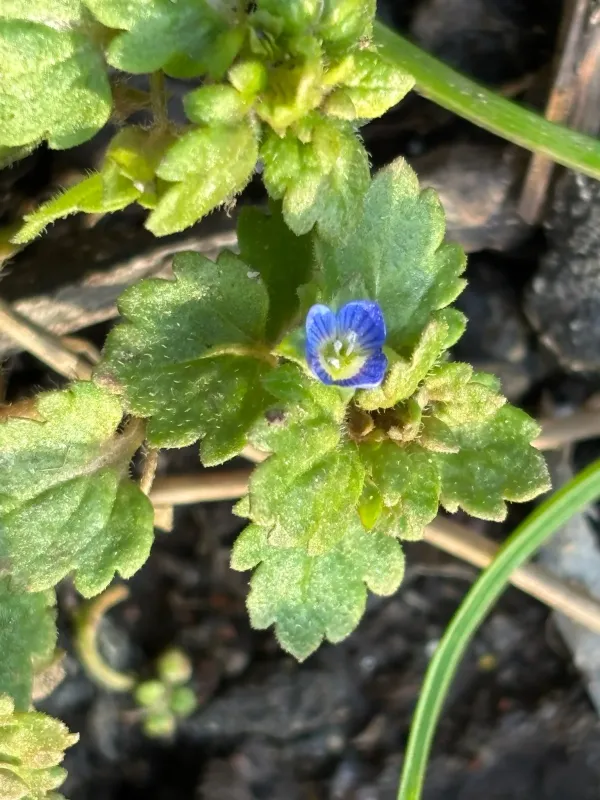
Botanically, Veronica polita is characterized by prostrate or ascending stems that often root at the nodes. The leaves are typically ovate or rounded with serrated margins, providing the plant with a compact but spreading growth habit.
The flowers are solitary, emerging from the leaf axils, and are notable for their sky-blue or violet-blue petals with darker veins. This species is prolific, capable of producing a large number of seeds throughout a long flowering season.
Its root system is fibrous and shallow, allowing it to efficiently compete with crops for surface moisture and nutrients. Because of its rapid growth and wide distribution, it is considered a significant nuisance in intensive agricultural systems.
Main diseases and pests
The primary threat posed by grey field-speedwell is its ability to outcompete crops for light and soil resources. In dense infestations, it can significantly reduce crop yields and interfere with mechanical harvesting operations.
This weed acts as a secondary host for several phytopathogens, including those responsible for powdery mildew and rust diseases. By harboring these fungi, the weed ensures the survival of pathogens during periods when primary crops are not available.
It also provides shelter for various agricultural pests, including aphids and nematodes, which can migrate from the weed to crop plants. This ecological role makes the weed a focal point for integrated pest management strategies.
Control measures rely heavily on cultural practices, such as crop rotation, stale seedbed preparation, and timely harrowing. Minimizing soil disturbance can sometimes help manage seed germination rates in certain field environments.
Chemical control remains a common solution, involving the use of selective herbicides applied at the early growth stages of the weed. Effective management requires long-term effort to exhaust the soil seed bank and prevent re-infestation.