
Globularia incanescens
Globularia incanescens
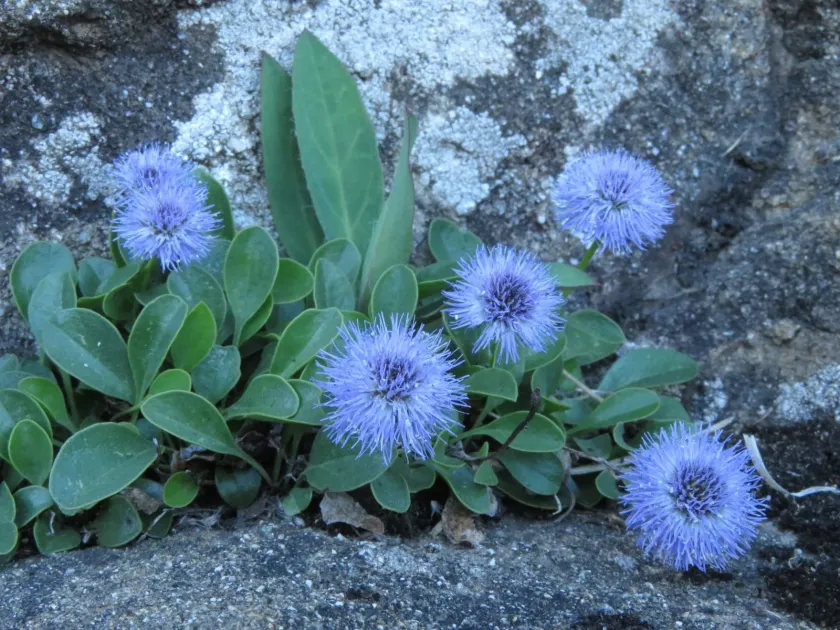
Description
Sowing dates
Seeds of Globularia incanescens require a period of cold stratification for 4 to 6 weeks to break dormancy and ensure high germination rates before sowing.
The seeds should be sown in a well-draining, sandy compost mix, barely covered with a fine layer of grit or soil, as they need some light to germinate effectively.
When starting indoors, maintain a cool environment around 15°C to mimic the natural early spring conditions of its native alpine habitat.
Transplanting into the permanent garden site should be done in late spring once the soil is workable and the risk of frost has passed.
Spacing should be sufficient to allow good airflow, typically 20-30 cm apart, to ensure the plant forms its characteristic dense, silvery-green cushion.
Growing requirements
Globularia incanescens, belonging to the Plantaginaceae family, is a perennial plant native to the rocky regions of Italy, adapted to thrive in limestone-rich soils.
This species requires full sun exposure and poor, gritty soil that drains water quickly to prevent the roots from rotting during the dormant season.
It is perfectly suited for rock gardens, stone troughs, or crevices where it can display its globose, light-blue flower heads during the late spring season.
The plant is highly tolerant of drought and prefers neutral to slightly alkaline pH levels, reflecting the geological composition of its native Apennine slopes.
During the growing season, it needs very little intervention, requiring only minimal watering and no extra fertilization, as it is adapted to nutrient-poor environments.
Main diseases and pests
The most significant threat to this species is poor drainage, which can quickly lead to root rot and crown rot, especially in humid or temperate climates.
Fungal issues may arise if the plant is overcrowded or if the foliage remains wet for extended periods, making it susceptible to various leaf spot diseases.
Gastropods, particularly slugs and snails, are frequent pests that can consume the soft foliage of the rosettes, particularly in early spring.
Good cultural practices, such as using a thick layer of grit around the crown, help to keep the leaves dry and significantly reduce the incidence of rot.
- Ensure excellent drainage by adding rock debris to the soil.
- Monitor the garden for slug activity during wet weather.
- Avoid overhead watering to keep foliage dry.