
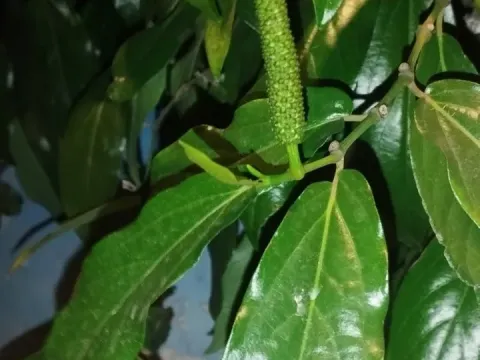
Javanese long pepper
Piper retrofractum
Propagation of Javanese long pepper on a commercial scale is typically performed vegetatively using stem cuttings to ensure the preservation of varietal characteristics.
What the section contains
Javanese long pepper
Planting of cuttings is ideally scheduled for the beginning of the rainy season, which provides the necessary moisture for high establishment rates in the soil.
The optimal planting density is approximately 2500 plants per hectare, allowing sufficient space for the vine's development while facilitating easier plantation management.
In natural conditions, the plant begins to bear fruit within 2 to 3 years after planting, exhibiting a slow initial growth rate common among tropical climbing plants.
When cultivating in controlled environments or nurseries, maintaining stable substrate moisture and high air temperatures is crucial for successful root development.
Javanese long pepper is a perennial woody vine belonging to the Piperaceae family, native to the tropical regions of Southeast Asia.
The plant thrives in a humid tropical climate with air temperatures ranging from +22 to +30 degrees Celsius and annual rainfall exceeding 2000 mm.
For successful cultivation, well-drained, fertile loamy soils with high organic matter content and a neutral to slightly acidic pH level are required.
While the crop is shade-tolerant, it produces the highest quality yields when grown in partial shade, often provided by established support trees.
As this is a climbing vine, agronomic practices must include the installation of robust supports, such as wooden posts or living trees, to allow the vine to climb vertically.
The yield of Javanese long pepper depends significantly on the age of the plantation, the availability of nutrients, and the quality of supports provided for vegetation.
After entering the active fruiting phase, which usually occurs by the third year, a plantation can produce stable harvests for a period of 10 to 15 years.
Economic utilization includes the use of dried fruits as a spice, prized for its specific pungent aroma and spicy flavor, attributed to high piperine content.
In the pharmaceutical industry, extracts from the fruits are used in traditional medicine to develop formulations with antibacterial and digestive health properties.
Profitability of this crop is high when targeted at specialized spice markets and pharmaceutical ingredient suppliers, where high-quality raw materials are valued.
The primary threats to the crop include fungal diseases of the root system, which are often caused by waterlogging and a lack of proper soil drainage.
Leaves and stems may be damaged by various sap-sucking pests, including mealybugs and spider mites, which reproduce rapidly in warm tropical climates.
Root rot (Phytophthora) is a critical risk factor capable of destroying a plantation in a short period if humidity is high and ventilation is poor.
To combat pests and pathogens, regular monitoring of foliage condition and the use of preventative biological treatment methods are highly recommended.
Adherence to crop rotation principles and timely sanitary pruning of dead or damaged vine sections significantly reduces the impact of potential diseases.
Harvesting begins when the fruiting spikes reach maximum density but before they have fully changed their color to a bright red.
The harvest is conducted manually by cutting the spikes along with a short stalk to prevent damage to the fruit and the primary stem of the plant.
After collection, the spikes are subjected to solar drying or mechanical drying, which allows them to achieve the required hardness and concentration of essential oils.
Properly dried long pepper develops a dark brown or almost black color, with a wrinkled and extremely durable surface structure.
Storage of the processed raw material must take place in dry, ventilated areas shielded from direct sunlight to preserve its sensory and chemical properties.