
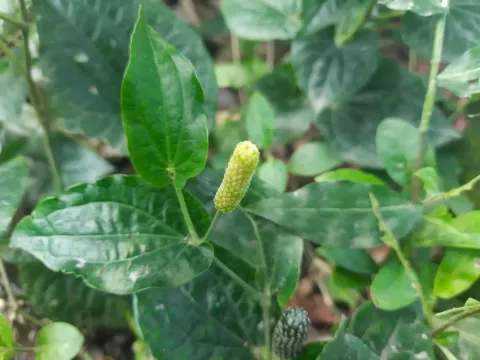
Long pepper
Piper longum
Propagation of Long pepper (Piper longum) is primarily achieved through stem cuttings or layering, as the plant responds well to vegetative reproduction. This method ensures that the offspring maintain the characteristics of the mother plant, which is crucial for uniform yield.
What the section contains
Long pepper
The ideal time for planting is the beginning of the monsoon season, when high humidity and moderate temperatures facilitate rapid rooting. Cuttings should have 3 to 4 nodes and be taken from healthy, mature stems.
Before planting, cuttings are often treated with natural rooting hormones to enhance establishment. They are then placed in a nursery bed with rich, well-draining soil for several weeks until they develop a robust root system.
Spacing is essential for the healthy growth of this trailing vine. Planting at intervals of 1 to 1.5 meters ensures adequate airflow, which is critical to preventing the build-up of fungal pathogens within the canopy.
Upon transplanting to the main field, it is recommended to provide mulch around the base of the plant to preserve soil moisture and regulate temperature. Young plants require consistent watering until they become fully established in their environment.
Long pepper belongs to the Piperaceae family and is native to the tropical regions of India and Southeast Asia. It requires a humid, tropical climate to thrive, making it sensitive to extreme cold and drought.
The crop prefers deep, fertile, and well-drained loamy soils. It cannot tolerate waterlogging, which often leads to root rot and other systemic diseases. The soil pH should be slightly acidic to neutral for optimal nutrient uptake.
Temperature is a key factor, with the plant performing best between +22°C and +32°C. In areas with colder winters, the plant must be cultivated in greenhouses where temperature and humidity can be strictly controlled throughout the year.
As a vine, Piper longum requires support to climb. In traditional cultivation, wooden stakes or trellises are used to allow the plant to grow vertically, which improves light exposure and makes harvesting significantly more efficient.
Balanced nutrition, including organic manure and appropriate NPK ratios, is necessary during the active growth phase. Regular fertilization helps maintain the high metabolic rate required for consistent production of floral spikes.
The economic yield of Long pepper consists of the dried immature spikes of the plant. A well-maintained plantation can reach its peak production capacity within three to four years of initial establishment.
Harvesting is labor-intensive and must be done in multiple passes. The yield depends heavily on the vine's health and the availability of vertical support structures. Proper management can result in hundreds of kilograms of dried spice per hectare.
To maximize quality, the spikes must be harvested at the correct maturity stage. If harvested too early, the spice lacks potency; if harvested too late, the essential oils begin to degrade, reducing the commercial value.
Post-harvest processing involves immediate drying of the spikes in the shade or using mechanical dryers to achieve the desired moisture content. This preservation step is vital to avoid fungal contamination during storage.
Marketable yield is evaluated based on the density, color, and pungency of the spikes. Properly processed and stored Long pepper can retain its quality and volatile oil content for extended periods.
Root rot, often caused by species of Phytophthora or Pythium, is a significant threat to Long pepper plantations. Ensuring excellent soil drainage and avoiding excess water is the primary defense against these pathogens.
Leaf spot diseases, including anthracnose, can affect the foliage, particularly under conditions of high humidity and poor ventilation. Regular scouting and the application of bio-fungicides are recommended for effective management.
Root-knot nematodes are a hidden danger, causing stunting and yellowing of the foliage. Crop rotation or soil solarization in the nursery stage can help manage nematode populations before they establish in the field.
Pests like aphids and mites may target the growing tips of the vine, especially in sheltered greenhouse conditions. Integrated pest management (IPM) strategies should be employed to maintain plant health without chemical residues.
Weed management is equally important, as weeds compete for limited nutrients and can serve as alternative hosts for pests. Maintaining clean rows through manual weeding is standard practice in sustainable Long pepper farming.
Harvesting is performed manually to ensure that only the spikes meeting the specific maturity criteria are removed. Care must be taken not to damage the main vine stems, which are needed for future growth cycles.
The collected spikes are transported quickly to processing areas to minimize the risk of fermentation or fungal decay. Fresh spikes have high water content and can spoil quickly if kept in bulk without airflow.
Drying is the most critical post-harvest step. The spikes are spread in thin layers on clean surfaces, protected from direct rain, and turned regularly to ensure uniform moisture loss and prevent mold growth.
Once dried to the appropriate hardness, the product is cleaned to remove field debris like dirt, leaf fragments, and broken stems. This cleaning process is essential for achieving premium quality grades.
Finally, the sorted product is stored in airtight, moisture-proof containers in a cool and dark place. This protects the spice from light, humidity, and temperature fluctuations, ensuring a long shelf life for the final product.