
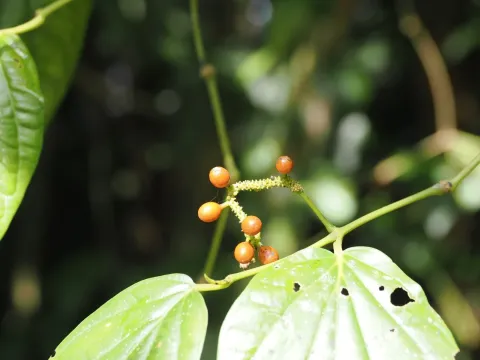
Dog pepper
Piper caninum
Dog pepper (Piper caninum) is a unique perennial plant species belonging to the Piperaceae family. Native to the humid rainforests of Southeast Asia, it functions primarily as a climbing vine, adapting to the understory conditions of tropical environments.
What the section contains
Dog pepper
The environmental requirements for this plant are quite specific: it thrives in temperatures between 22°C and 28°C. It is intolerant to frost and cold drafts, meaning that successful cultivation outside its natural range requires a stable greenhouse or indoor climate control system.
Regarding soil, Piper caninum requires a well-draining, nutrient-rich substrate. A mixture rich in leaf mold, peat, and organic compost is ideal. Ensuring proper drainage is crucial, as the root system is highly susceptible to rot if water persists in the soil for too long.
Light management is another vital aspect of its agronomy. As a forest-dwelling species, it prefers filtered or indirect light. Exposure to intense, direct sunlight often causes chlorosis and necrotic spots on the foliage, significantly reducing the plant's overall health and growth rate.
The cultural practice for this species focuses on vertical growth management. Providing structural supports such as moss poles or trellises is essential. This not only supports the vine's natural physiology but also ensures proper airflow, which reduces humidity-related stress on the leaves.
The main threats to Piper caninum are soil-borne pathogens such as Pythium and Rhizoctonia, which are encouraged by waterlogged conditions. Maintaining a strict irrigation schedule and using sterilized soil media is the best prophylactic measure against these threats.
Insect pests, specifically spider mites, are common in low-humidity indoor environments. Regular misting and the maintenance of relative humidity above 60% are effective strategies to prevent outbreaks, ensuring the plant remains vigorous and free from systemic damage.