
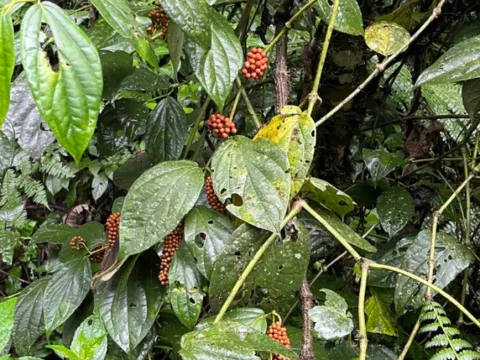
Guinea pepper
Piper guineense
Guinea pepper (Piper guineense), often referred to as Ashanti pepper, is a perennial vine species belonging to the Piperaceae family. It is commercially cultivated for its pungent seeds, which serve as both a popular culinary spice and a traditional medicinal ingredient in Western and Central Africa.
What the section contains
Guinea pepper
Propagation is generally performed by planting seeds in nurseries or utilizing stem cuttings. Sowing should coincide with the onset of the rainy season to ensure that the young seedlings receive adequate moisture during their critical establishment phase, which is essential for developing a robust root system.
As a tropical forest plant, it thrives in environments with temperatures ranging from 20°C to 30°C. It requires a high level of humidity and is highly sensitive to frost, making it suitable only for specific tropical climates where it can grow in partial shade beneath forest canopy.
The crop requires fertile, well-draining soils with an optimal pH between 5.5 and 7.0. Rich loamy soils are ideal, as they retain sufficient moisture while allowing for good aeration. Adding organic matter, such as compost or mulch, helps maintain soil fertility and mimics the natural forest floor environment.
The most common threats to Guinea pepper production are fungal diseases, particularly root rot, which typically occurs in waterlogged soil. Proper drainage management is critical, as stagnant water is the primary catalyst for pathogen development that can destroy a crop in a short time.
- Aphids: Cause leaf curling and sap depletion.
- Spider mites: Proliferate in dry spells and damage foliage.
- Mealybugs: Often found on stems, reducing plant vigor.
To control these pests, farmers are advised to monitor fields regularly, prune dense foliage to improve airflow, and use environmentally friendly neem-based sprays. Maintaining biodiversity within the plantation area can also help suppress pest populations naturally through predatory insects.