
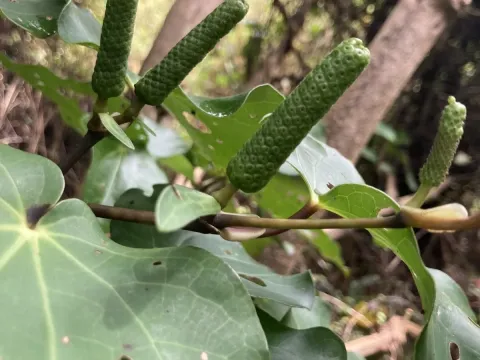
Kawakawa
Piper excelsum
Kawakawa (Piper excelsum) is a distinct species within the Piperaceae family, native to New Zealand and various Pacific islands. This evergreen shrub is highly valued for its aromatic heart-shaped leaves and its traditional significance in Polynesian medicine and culinary practices.
What the section contains
Kawakawa
Regarding its habitat requirements, the plant thrives in shade-dappled environments, mimicking its natural understory origin. It requires well-draining, humus-rich soil that retains moisture without becoming waterlogged, as the roots are susceptible to rotting in anaerobic conditions.
Climate needs are strictly tropical or warm-temperate; Piper excelsum does not tolerate freezing temperatures. High air humidity is essential for maintaining leaf health and preventing dehydration, making sheltered greenhouse or conservatory environments ideal for cultivation in non-native regions.
Agronomic management involves maintaining constant moisture levels and ensuring the plant is protected from intense midday sun, which can scorch the foliage. Periodic application of organic amendments supports the leafy growth that is frequently harvested for its medicinal and culinary properties.
The botanical structure of the plant consists of woody, jointed stems and dark green leaves. Its chemical profile, rich in essential oils, gives the plant a spicy taste and makes it a sought-after natural product for various infusions and traditional herbal preparations.
Common threats to Kawakawa include fungal pathogens such as mildew and root rot, which typically occur due to poor air circulation or over-watering in confined spaces.
Sucking insects, including aphids and mealybugs, are frequent pests that congregate on the undersides of leaves, extracting nutrients and weakening the plant structure.
Soil-borne nematodes can pose a significant threat to the root system, causing stunted growth and yellowing of the foliage, which is difficult to reverse once established.
Viral infections are often spread through contaminated pruning equipment, emphasizing the importance of cleaning tools between individual plants during maintenance.
To preserve plant health, growers should focus on maintaining a balanced microclimate and performing regular hygiene practices to remove dead or diseased plant tissue immediately.