
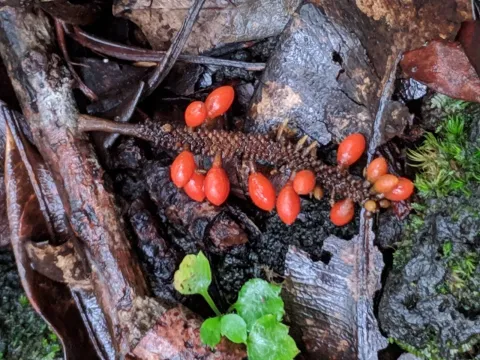
Bourbon pepper
Piper borbonense
Bourbon pepper (Piper borbonense) is a perennial evergreen vine belonging to the Piperaceae family. This species is native to the Mascarene Islands, particularly Réunion, where it thrives in the humid conditions of tropical rainforests.
What the section contains
Bourbon pepper
The plant requires consistently high temperatures and is extremely sensitive to frost. It grows best in semi-shaded environments, mirroring its natural habitat where it uses larger trees for structural support while staying protected from direct, harsh sunlight.
Cultivation requires soil that is loose, fertile, and possesses excellent drainage capabilities. It is essential to maintain constant substrate moisture without allowing waterlogging, which is best achieved through high organic content and regular mulching.
High relative humidity is a critical factor for the success of this crop. In controlled environments, growers must replicate tropical conditions with high humidity levels and a lack of extreme temperature fluctuations to prevent plant stress.
Agronomic management involves providing sturdy vertical trellises to support the vine's growth habit. The crop responds well to balanced liquid fertilization, focusing on nitrogen during vegetative development and phosphorus-potassium blends during flowering.
The yield of Bourbon pepper is heavily dependent on light intensity and the maturity of the vine. Harvesting occurs when the berries reach a dark red stage, indicating peak maturity and optimal essential oil content.
The plant typically reaches commercial productivity within 3 to 4 years of planting. While individual plant yields are modest compared to common agricultural crops, the scarcity and high market value of the spice make it a profitable niche crop.
The primary economic use is the processing of dried berries into premium spice. The unique aromatic profile makes it highly sought after in international gourmet markets and the fragrance industry.
Proper post-harvest handling is crucial for quality. Drying is performed in shaded, well-ventilated areas to prevent UV degradation of the essential oils, ensuring the product retains its distinct flavor and color profile.
Hand-picking is the standard harvesting method, ensuring that only the most mature clusters are selected. This labor-intensive process ensures top-tier quality that meets the rigorous standards of culinary experts worldwide.
Fungal root diseases represent the most significant threat to Piper borbonense, primarily caused by overwatering and poor soil aeration. Root rot can lead to rapid wilting and the total loss of the crop if not managed early.
Pests such as spider mites and mealybugs frequently target the plant, particularly in greenhouse settings with improper ventilation. These pests deplete plant vitality and create entry points for secondary infections.
Prevention relies on strict sanitation protocols, such as removing debris and disinfecting tools. Using high-quality, sterilized growing media during the initial planting stages significantly lowers the risk of pathogen outbreaks.
Integrated pest management (IPM) is encouraged to avoid using harsh chemicals that could compromise the final quality of the spice. Biological controls and the removal of infested leaves are the first lines of defense for growers.
Regular visual monitoring of the vines is essential for early detection of stress. If signs of infestation or fungal damage appear, growers should immediately adjust environmental controls and isolate the affected sections of the crop.