
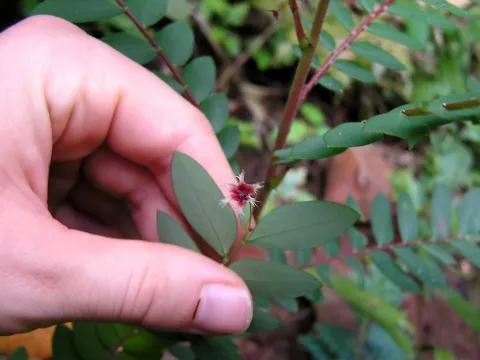
Phyllanthus pulcher
Phyllanthus pulcher
Phyllanthus pulcher is a perennial shrub species belonging to the Phyllanthaceae family. Native to Southeast Asia, it is primarily valued for its fern-like, delicate foliage and its role in tropical landscapes and traditional herbal medicine.
What the section contains
Phyllanthus pulcher
The plant thrives in warm, humid environments and requires consistent tropical conditions to flourish. It is strictly a non-hardy plant in temperate regions, necessitating greenhouse or indoor cultivation where temperatures remain consistently above 18°C throughout the year.
For optimal growth, the soil must be light, acidic to neutral, and possess excellent drainage capabilities. Waterlogging is detrimental to the health of the plant, as the root system is sensitive to prolonged saturated conditions that may lead to necrotic decay.
Light requirements involve bright, indirect sunlight. While the plant can tolerate partial shade, insufficient light intensity will lead to sparse foliage and weak stem elongation, reducing the overall aesthetic appeal of the ornamental shrub.
In terms of agricultural utility, Phyllanthus pulcher is subject to research for its potential phytochemical content. Its biological extracts are documented to contain compounds that demonstrate various bioactivities, supporting its use in ethnopharmacological studies.
The most significant threats to Phyllanthus pulcher include sap-sucking pests such as spider mites and mealybugs. These pests thrive in dry environments, making humidity management a crucial component of integrated pest control.
Fungal pathogens represent the primary disease pressure, often triggered by excessive soil moisture and high humidity combined with poor airflow. Common symptoms involve foliar spotting and shoot tip dieback, which can quickly spread if left unaddressed.
Regular sanitation, including the removal of yellowing leaves and dead stems, is essential to mitigate the spread of fungal spores. Proper spacing between containers or garden beds ensures adequate ventilation, which significantly discourages pathogen development.
Chemical control should be approached with caution due to the plant's delicate foliage, which can suffer from phytotoxic responses to certain pesticides. Biological controls or mild insecticidal soaps are generally preferred for indoor management.
Root rot, resulting from poor cultural practices, remains the most lethal threat to the plant. It is characterized by wilting, stunted growth, and eventual plant collapse. Preventing this requires careful monitoring of the watering frequency based on substrate moisture levels.