
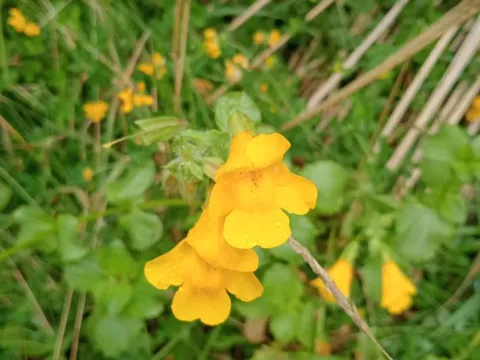
Erythranthe
Erythranthe
Erythranthe, commonly known as monkey flower, is typically started from seed indoors about 8 to 10 weeks before the last frost date in the region.
What the section contains
 Common monkeyflower
Erythranthe guttata
Common monkeyflower
Erythranthe guttata
 Copper monkeyflower
Erythranthe cuprea
Copper monkeyflower
Erythranthe cuprea
 Erythranthe cardinalis
Erythranthe cardinalis
Erythranthe cardinalis
 Erythranthe hybrida
Erythranthe hybrida
Erythranthe hybrida
 Erythranthe inflata
Erythranthe inflata
Erythranthe inflata
 Erythranthe naiandina
Erythranthe naiandina
Erythranthe naiandina
 Erythranthe nepalensis
Erythranthe nepalensis
Erythranthe nepalensis
 Erythranthe robertsii
Erythranthe robertsii
Erythranthe robertsii
 Erythranthe sessilifolia
Erythranthe sessilifolia
Erythranthe sessilifolia
 Geyer's monkeyflower
Erythranthe geyeri
Geyer's monkeyflower
Erythranthe geyeri
 Monkey flower
Erythranthe tenella
Monkey flower
Erythranthe tenella
 Musk flower
Erythranthe moschata
Musk flower
Erythranthe moschata
 Yellow monkeyflower
Erythranthe lutea
Yellow monkeyflower
Erythranthe lutea
Erythranthe
The seeds are extremely small, requiring surface sowing on top of a moist, sterile seed-starting mix without covering them, as they need light to germinate.
Maintain a consistent temperature of 18–20 degrees Celsius and provide high humidity using a plastic cover until the first true leaves appear.
Hardening off the seedlings is a crucial step before transplanting them into the garden to prevent transplant shock caused by temperature fluctuations.
Space the plants approximately 15–25 centimeters apart depending on the variety to ensure adequate airflow and prevent the development of fungal pathogens.
Belonging to the Phrymaceae family, this species thrives in cool, moist, and partially shaded environments, making it ideal for northern aspects of the garden.
The soil must be rich, well-draining, yet consistently moist; it should never be allowed to dry out completely during the active growing season.
Regular irrigation is vital, as the plant is highly sensitive to drought; mulching can help maintain soil moisture levels and suppress weed growth around roots.
Balanced liquid fertilizers applied every two weeks during the flowering period will promote continuous blooming and maintain the plant's overall health.
Deadheading spent flowers is highly recommended, as it prevents seed formation and encourages the plant to produce a second wave of vibrant blossoms.
Powdery mildew is a common issue in humid conditions, appearing as a white, dusty growth on the foliage and significantly weakening the plant.
Grey mold, or Botrytis, can attack the stems and leaves if there is insufficient air circulation or if the plants are consistently overcrowded.
Aphids represent a primary pest risk, clustering on tender new growth and causing leaves to curl and stunt the development of new flower buds.
Whiteflies can also become problematic, especially in sheltered or greenhouse environments, where they reproduce rapidly on the undersides of leaves.
- Ensure proper spacing to increase air movement.
- Remove and destroy infected plant debris immediately.
- Apply horticultural oils or soaps at the first sign of pest infestation.