
Yellow monkeyflower
Erythranthe lutea
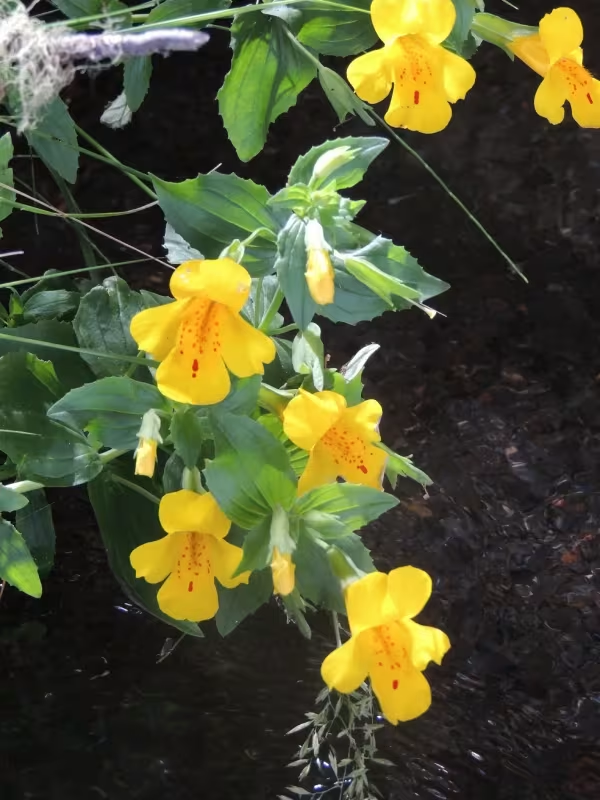
Description
Sowing dates
Erythranthe lutea, a member of the Phrymaceae family, is commonly propagated from seeds sown in late winter or early spring. The seeds are minuscule and require surface sowing on a moist, fine-textured seed-starting mix.
Light is essential for the germination of these seeds, so they should not be buried deeply. A thin layer of vermiculite can be used to hold them in place while allowing light penetration through the covering.
Seedlings should be kept in a well-lit area away from direct scorching sunlight. Once the seedlings reach a sufficient size, they are pricked out into individual pots to allow the root systems to expand.
Hardening off the plants is a critical step before transplanting them into the final outdoor location. This process should be done gradually over a week to prevent transplant shock.
The planting distance should be maintained at about 20 centimeters. This spacing ensures that the plants can grow into a dense, attractive display while maintaining sufficient airflow to prevent diseases.
Growing requirements
As a moisture-loving species, the yellow monkeyflower performs best in damp, nutrient-rich soils. In natural settings, it thrives along stream banks and in wetlands, which suggests its preference for high humidity.
While the plant can tolerate full sun in cool climates, it prefers partial shade in warmer regions. Providing shade during the hottest part of the day prevents wilting and leaf scorch.
The soil should be kept consistently moist. If the container or garden plot dries out, the plant will quickly drop its flowers and potentially enter a dormant state to protect itself from desiccation.
Fertilization with a balanced liquid fertilizer is recommended every few weeks during the growing season. This ensures that the plant has enough energy to produce its iconic bright yellow flowers continuously.
Mulching the base of the plant is an effective strategy to maintain soil moisture and suppress weed growth. Organic mulch, such as pine bark or straw, works best for this purpose.
Main diseases and pests
Aphids are the most common pest associated with this plant, as they frequently cluster on the tender new growth. Regular inspection and spraying with water or insecticidal soap are usually effective measures.
Fungal issues such as powdery mildew can become a significant threat in stagnant air conditions. Proper spacing and thinning out dense foliage help to improve air circulation and minimize infection risks.
Root rot is a major threat if the plant is grown in soil that lacks proper drainage. While the plant loves water, it does not like waterlogged, anaerobic conditions for extended periods.
Slugs and snails can cause substantial damage to the leaves overnight. Utilizing copper tape around containers or bait traps in the garden is recommended for effective protection.
- Maintain good hygiene by removing dead leaves.
- Avoid overhead watering to keep foliage dry.
- Monitor for early signs of pest infestations.