
Erythranthe cardinalis
Erythranthe cardinalis
Description
Sowing dates
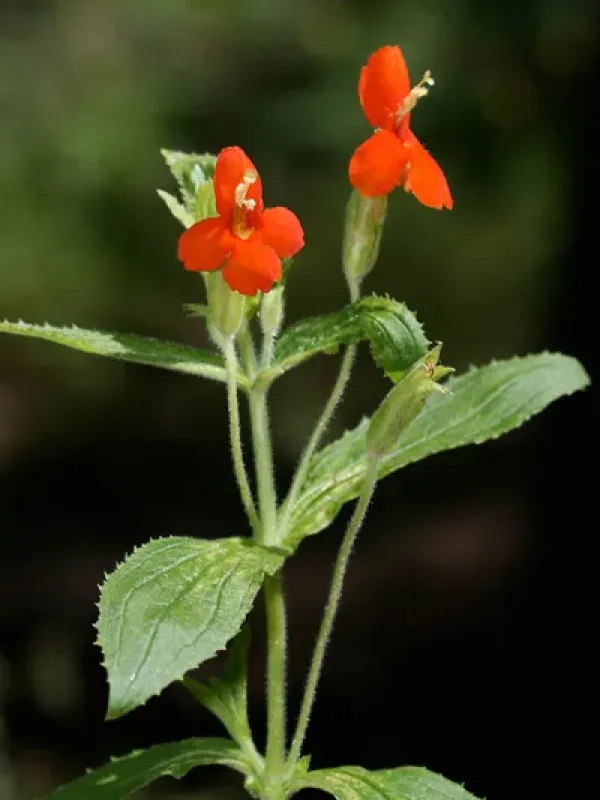
Erythranthe cardinalis, commonly known as the cardinal monkeyflower, is a perennial herbaceous plant belonging to the Phrymaceae family. It is prized for its vibrant, trumpet-shaped flowers that attract hummingbirds.
Propagation is primarily done via seeds, which are extremely tiny. They should be sown on the surface of a moist, sterile seed-starting mix without covering, as they require light to germinate effectively.
Sowing indoors should occur in late winter to early spring. Maintaining a consistent temperature between 18 and 22 degrees Celsius is critical for uniform germination within a few weeks.
Seedlings require bright, indirect light once they emerge. After developing several true leaves, they should be transplanted into larger containers to allow for root development before hardening off.
Transplanting into the garden occurs when soil temperatures have warmed and the risk of frost has passed, typically late spring. Careful handling is necessary due to the delicate nature of young root systems.
Growing requirements
The cardinal monkeyflower thrives in moist, well-draining soil rich in organic matter. In its native habitat, it is frequently found along streams, seeps, and wet meadows, indicating a high water demand.
Ideal soil pH ranges from slightly acidic to neutral. While the plant loves water, it is important to prevent soil compaction and ensure that the root zone is adequately aerated to avoid root rot.
Regarding light, Erythranthe cardinalis prefers full sun to partial shade. In regions with extremely hot summers, some afternoon shade is beneficial to prevent leaf scorch and premature flower wilting.
Fertilization with a balanced, slow-release fertilizer during the growing season supports vigorous growth and prolonged flowering. Over-fertilization should be avoided to prevent excessive vegetative growth at the expense of blooms.
Regular mulching is recommended to retain soil moisture and stabilize the root temperature, especially during dry spells or high-temperature periods in the summer.
Main diseases and pests
The primary disease concerns for this species are fungal infections such as powdery mildew and leaf spot. These issues typically emerge when air circulation is poor and humidity levels remain high for extended periods.
Pest management is essential, as aphids and spider mites can rapidly infest tender shoots. Aphids are often found clustering on new growth, while spider mites favor dry, hot conditions.
- Monitor leaf undersides for early signs of infestation.
- Use organic insecticidal soaps for minor outbreaks.
- Ensure adequate spacing between plants to improve airflow.
- Apply systemic fungicides only as a last resort for severe fungal infections.
Maintaining plant vigor through proper watering and fertilization practices remains the best preventative measure against most pests and opportunistic pathogens.