
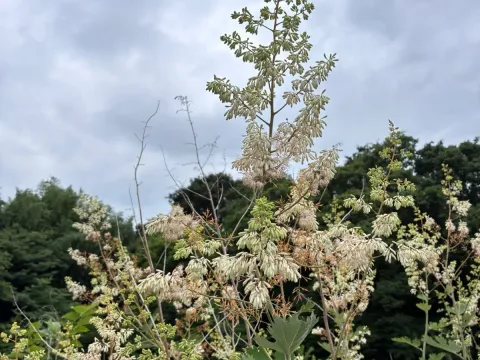
Macleaya
Macleaya
Macleaya is typically propagated vegetatively by dividing the rhizomes, which ensures rapid establishment and maintains the cultivar's specific traits. Planting is best performed in early spring before active sap flow, or in the autumn during dormancy, allowing the plants to root before winter.
What the section contains


Macleaya
If propagation from seed is preferred, sowing should be done before winter directly in the field or in seed trays in early March. Macleaya seeds show strong germination energy but often require cold stratification to ensure uniform emergence across the plot.
Seeds should be covered with a very thin layer of soil, no more than 0.5–1 cm deep, as they are small and sensitive to substrate density. After sowing, firming the soil surface is recommended to improve moisture transfer from the soil to the seeds.
For industrial-scale cultivation, rows should be spaced up to 70 cm apart. This density provides sufficient space for the massive root system and allows for mechanical maintenance during the growing season.
During the first year, the crop develops relatively slowly, focusing on root establishment. It is crucial to keep the spaces between rows free from weeds, as competition can significantly stunt the growth of young Macleaya shoots.
Macleaya is a heat-loving plant that prefers sunny, sheltered locations, as its tall stems are prone to damage from high winds. The crop is demanding in terms of soil fertility and cannot tolerate waterlogged conditions, which lead to root rot.
The ideal soil is a loose loam or chernozem with a neutral to slightly acidic pH. Excellent drainage is non-negotiable; standing water in the root zone is the primary cause of plantation failure during the active growing season.
The crop responds well to organic fertilization such as well-rotted compost or manure added before planting. Nitrogen fertilizers encourage the rapid development of green biomass, which is essential for maximizing the yield of pharmaceutical raw materials.
Although the plant exhibits moderate frost resistance, mulching the root zone with peat or straw in regions with harsh, snowless winters is advised. This protects the rhizomes from freezing and ensures a vigorous start in the following spring.
During the peak growing period, Macleaya requires regular irrigation, particularly during bud formation. Moisture stress during hot summer months will cause premature leaf yellowing and a significant reduction in the alkaloid content of the plant tissue.
The yield of Macleaya is measured by the weight of dried aerial parts, which are rich in valuable isoquinoline alkaloids like sanguinarine and chelerythrine. A well-maintained plantation can be harvested for 5 to 7 years.
The peak concentration of active compounds occurs during the flowering stage, so harvest timing is critical for quality control. With proper agronomic care, the crop provides consistent yields throughout its productive lifespan.
Crop productivity is heavily influenced by planting density and soil management. Under intensive cultivation methods, the yield of dry biomass per hectare can be substantial, making it a viable commercial venture for pharmaceutical suppliers.
The chemical profile of the plant is relatively stable but remains highly dependent on the local climate and soil conditions. This requires agronomists to adhere strictly to regional production guidelines to ensure the potency of the extract.
As the plantation ages, soil compaction around the rhizomes can lead to declining yields. After 6–8 years, it is often recommended to renovate the plot or replant with organic enrichment to restore the site's productivity.
Macleaya is naturally resistant to many pests and diseases due to the high concentration of alkaloids in its sap, which acts as a deterrent. However, excessive moisture can lead to root rot, which is the most serious threat to the crop.
Insect pests rarely cause major damage, although sporadic infestations of aphids may occur. If necessary, interventions should be handled according to strict herbal medicine standards, prioritizing biological controls over synthetic chemicals.
Preventative measures against rot include avoiding over-irrigation and maintaining soil aeration. Regular mechanical cultivation of row spaces helps minimize fungal growth while simultaneously removing competitive weed species.
Weeds are primarily a threat during the initial establishment phase. Once the plant achieves its full height and canopy, it suppresses most surrounding vegetation, significantly reducing the labor required for maintenance in mature plots.
Chemical pesticide use is highly restricted because the raw material is intended for human pharmaceutical use. Success lies in implementing a strict crop rotation schedule and maintaining high sanitation standards on the plantation.
The aerial part of the plant (the herb) is harvested during the peak flowering stage to ensure the highest alkaloid content. This usually occurs in mid-summer, depending on the latitude and local weather patterns of the growing region.
Harvesting is performed by mowing the stems at a height of 15 cm above the soil surface. This method leaves the core root system intact, allowing the plant to regenerate successfully for future harvests.
Mowed biomass must be transported quickly to the drying facility to prevent heat buildup and decay. Quality preservation depends on how rapidly the material is stabilized after it has been severed from the root.
Drying is conducted in industrial driers at temperatures up to 60 degrees Celsius or in shaded, well-ventilated barns. Excessive heat can degrade the active alkaloids, so precise temperature control is essential for final product quality.
Once fully dried, the raw material is milled, packaged, and stored in a dry environment away from direct sunlight. Proper storage prevents chemical degradation and maintains the potency of the material for long-term use.