
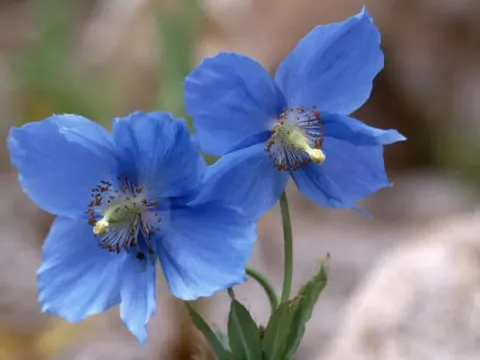
Meconopsis sheldonii
Meconopsis sheldonii
Meconopsis sheldonii is a perennial herbaceous plant belonging to the Papaveraceae family. Cultivation typically begins with seeds, which should be sown in late winter or early spring.
What the section contains
Meconopsis sheldonii
Seeds require a mandatory stratification period of 4–6 weeks at temperatures around +4°C to improve germination rates. After stratification, they are sown on the surface of a light, moisture-retentive substrate without covering them with soil, as they require light to germinate.
Seed containers should be covered with plastic or glass, maintaining a temperature between +15°C and +18°C. Seedlings usually emerge within 3–4 weeks, at which point the cover is removed to ensure adequate airflow.
Pricking out the seedlings into individual pots is performed once two true leaves have developed, taking great care to protect the fragile root system during transplantation.
Transplanting into open ground is best carried out in early summer, once the risk of frost has passed, selecting a location protected from strong winds.
This crop has specific climatic requirements, favoring cool and humid environments. Regions with moderate summer temperatures and high atmospheric humidity are most conducive to its growth.
Meconopsis thrives in fertile, humus-rich soils that possess excellent drainage while retaining sufficient moisture. An ideal soil pH is neutral or slightly acidic.
For optimal development, the plant requires partial shade. Direct exposure to intense midday sunlight can scorch the leaves and hinder plant vigor, so a north-facing site or dappled shade under trees is recommended.
Consistent irrigation is crucial; the soil must remain evenly moist at all times. However, waterlogging is fatal, as it rapidly leads to root rot and collar decay.
In regions with harsh winters, light winter protection is necessary. However, excessive covering should be avoided to prevent moisture build-up and crown rot, so breathable materials like spruce boughs are preferred.
Root rot is the primary threat to Meconopsis, generally caused by waterlogged soil and poor aeration. Preventive measures focus on improving soil drainage and monitoring irrigation frequency.
In high humidity conditions, the plant is susceptible to powdery mildew. This fungal infection manifests as a white, powdery coating on the foliage, which reduces photosynthetic capacity.
Slugs and snails are frequent pests, particularly during wet weather. They can quickly defoliate young plants, necessitating the use of protective barriers or bait stations.
Aphids may infest new growth during the active growing season. Effective control can be achieved through systemic insecticides or biological control agents if the infestation is caught early.
Improper nutrient management, particularly an imbalance in fertilizers, can weaken the plant's immune system, making it more prone to secondary infections and environmental stress.