
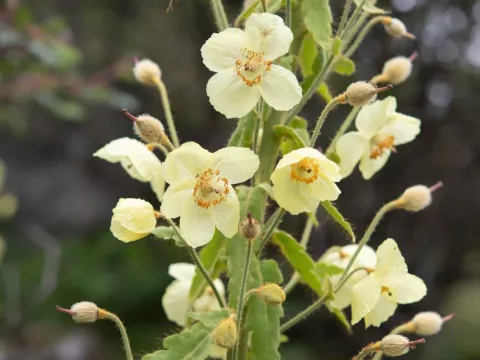
Meconopsis paniculata
Meconopsis paniculata
Meconopsis paniculata is a striking species within the Papaveraceae family, known for its majestic, panicle-like inflorescences. Cultivation starts with seed sowing, which is most successful when performed in late autumn for natural stratification or in early spring under controlled cool conditions.
What the section contains
Meconopsis paniculata
Seeds must be sown on the surface of a light, well-draining seed-starting mix, as they require light to germinate. Covering them with a thin layer of fine vermiculite is permissible, but they should never be deeply buried.
Maintenance of cool temperatures (between 10°C and 15°C) is critical during the germination phase. Fluctuating temperatures or excessive warmth will significantly inhibit the success rate of seedling emergence.
Transplanting requires extreme care due to the delicate and brittle nature of the taproot system. It is advised to prick out seedlings into individual pots as soon as they reach a manageable size to minimize root disturbance during final planting.
Permanent placement in the garden should occur once the seedlings are robust enough, typically in the late spring, ensuring that the roots remain undisturbed during the transfer from the container to the soil.
Originating from the Himalayan regions, this plant thrives in environments characterized by cool summers and high atmospheric humidity. It is inherently unsuited for regions with prolonged heat waves or arid climates.
The ideal soil profile is fertile, moisture-retentive, yet extremely well-draining. The plant performs best in a slightly acidic to neutral substrate, enriched with well-rotted leaf mold or organic compost.
Light requirements are strict; the plant prefers a sheltered, dappled shade location. Direct exposure to intense midday sunlight will likely cause leaf scorching and irreversible heat stress to the rosette.
Watering management is a delicate balance. The soil must remain consistently moist but never waterlogged. Irrigation should be directed at the base of the plant to keep the foliage dry, preventing rot at the crown.
Mulching is essential for temperature regulation and moisture retention. Organic materials, such as pine bark or decayed leaves, provide the root zone with the cool, stable conditions necessary for healthy growth.
The most significant threats to Meconopsis paniculata are fungal infections, particularly those triggered by poor drainage or stagnant humidity. Crown rot and root rot are common in overly wet or heavy soil conditions.
Slugs and snails are major pests that target young foliage and the succulent crown of the plant. Implementation of protective barriers or eco-friendly deterrents is often necessary during the active growing season.
Powdery mildew can occur during the late summer months, especially when night-time temperatures fluctuate significantly against high humidity. Providing adequate air circulation around the plants is the primary preventive measure.
Nutrient deficiencies or improper soil pH can lead to chlorosis, manifesting as yellowing foliage. Regular soil testing and the application of appropriate organic fertilizers can mitigate these nutritional imbalances.
Sanitation within the garden bed is vital. Removing old, decaying foliage and preventing over-crowding helps reduce the environment available for pathogens to establish themselves and proliferate.