
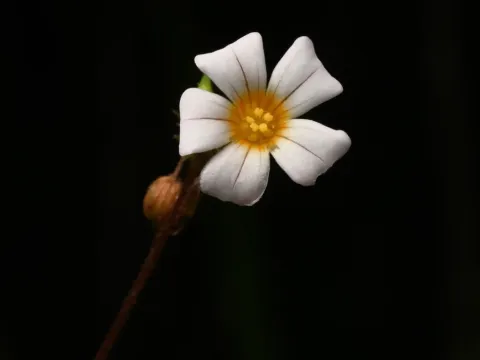
Biophytum helenae
Biophytum helenae
Biophytum helenae is a fascinating herb species belonging to the Oxalidaceae family. Known for its distinct appearance, the plant forms a miniature rosette of pinnate leaves that closely resembles a small palm tree.
What the section contains
Biophytum helenae
Native to tropical regions, this species thrives in humid forest floors where light is filtered through the canopy. Its evolutionary history has equipped it to flourish in environments with consistent warmth and moisture.
For successful cultivation, the plant requires a stable tropical climate. An ideal temperature range is between 22 and 28 degrees Celsius. Exposure to cold drafts or significant temperature fluctuations must be avoided to prevent stress.
Soil requirements for Biophytum helenae focus on excellent drainage and aeration. A substrate consisting of peat, perlite, and a small amount of organic matter provides the necessary structure while retaining enough moisture for healthy growth.
Lighting should be bright but indirect. Direct sunlight can easily scorch the delicate foliage. Ideally, place the plant in a location with soft, diffuse light or use a grow light system in a controlled environment.
The primary threats to Biophytum helenae include fungal infections caused by waterlogging. When the soil remains too wet for an extended period, roots suffer from hypoxia and susceptibility to pathogens increases significantly.
Spider mites represent the most common pest challenge, especially in low-humidity conditions. These pests feed on sap, leading to stunted growth, yellowing leaves, and a general decline in the plant's structural health.
Mealybugs are another potential pest that can hide in the leaf axils, creating a protective white substance that makes detection difficult until an infestation becomes severe.
Management of these threats involves proactive humidity control and regular inspection of the foliage. Using systemic insecticides or organic soaps is effective when infestations are caught at an early stage.
Preventive maintenance includes proper spacing between plants to ensure good airflow, regular cleaning of the potting environment, and careful monitoring of irrigation to avoid creating conditions favorable for pests and diseases.