
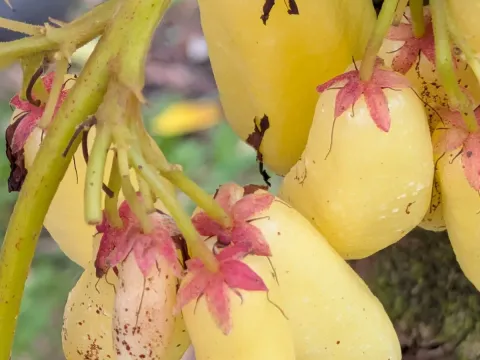
Bilimbi
Averrhoa L.
Bilimbi (Averrhoa bilimbi) is a perennial tropical fruit tree belonging to the Oxalidaceae family. In its native habitat, it can reach a height of 5 to 10 meters and is characterized by a dense, attractive canopy of pinnate leaves.
What the section contains


Bilimbi
This crop is highly sensitive to cold and cannot withstand frost. It thrives in sunny, well-protected locations where it is shielded from strong winds that can damage the delicate flowers and branches.
The ideal soil for Bilimbi is fertile, moisture-retentive, and well-drained, with an optimal pH range of 5.5 to 6.5. Good drainage is essential, as the plant is highly susceptible to root rot caused by waterlogged soil conditions.
Bilimbi requires high air humidity for optimal development and consistent soil moisture. In areas with a distinct dry season, supplemental irrigation is necessary to ensure the tree maintains healthy foliage and consistent fruit production.
Originating in Southeast Asia, particularly in Malaysia and Indonesia, the Bilimbi tree has since been introduced to tropical regions worldwide, including the Caribbean, Central America, and South America.
The tree exhibits a unique botanical trait known as cauliflory, where the fruits grow directly on the trunk and older branches. It is a prolific producer, often yielding fruit multiple times throughout the year in optimal climates.
The fruits are oblong berries, typically 4–10 cm in length, possessing a very crisp texture and an intensely acidic flavor due to their high oxalic acid content. They are prized for their versatility in culinary applications.
Culinary uses include using the fruit as a souring agent in curries, pickling, or preserving it in syrup. The juice is also a popular ingredient in tropical beverages, and it can be used to tenderize meat.
The plant has significant value in traditional medicine, where its leaves and fruits are used to treat a variety of ailments, including inflammatory conditions and hypertension. Its antiseptic properties are well-documented in local ethno-botany.
Harvesting should be handled with care to prevent bruising the delicate skin of the berries. Because they have a short shelf life in fresh form, commercial growers often process the fruit immediately after harvest.
Common pests include caterpillars and aphids, which target new growth and buds. Regular field inspections are recommended to detect and manage these pest populations before they cause significant canopy damage.
Fungal issues, particularly root rot, are the primary disease concern. These pathogens thrive in poorly drained environments, emphasizing the need for proper site selection and soil preparation during the initial planting phase.
Cultural practices, such as proper pruning, help maintain good airflow within the canopy. This reduces humidity levels around the inner branches and significantly lowers the risk of fungal infections during the rainy season.
Integrated Pest Management (IPM) techniques are preferred to maintain fruit quality and food safety. Biological controls should be utilized wherever possible to preserve the balance of the local ecosystem in the orchard.
Maintaining tree vigor through balanced fertilization and proper moisture management is the best defense against pests and diseases. Strong, healthy trees are naturally more resistant to the environmental stressors of tropical climates.