
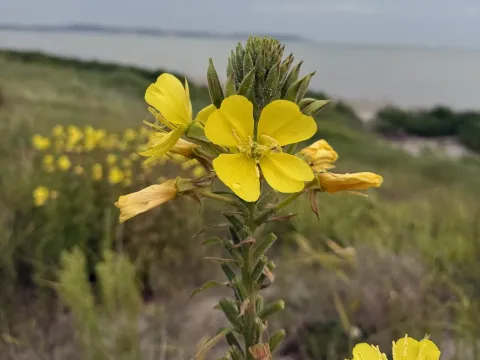
Oenothera fallax
Oenothera fallax
Oenothera fallax is a valuable species within the Onagraceae family, recognized for its oil-rich seeds and medicinal applications. Establishing a successful crop requires precise attention to sowing timing and soil preparation.
What the section contains
Oenothera fallax
The ideal time for planting is early spring, once the soil has warmed to at least 8–10°C. Sowing too early in cold soil can result in poor germination and increased susceptibility to soil-borne pathogens.
Seeds should be sown at a shallow depth of 1–2 cm. Given their small size, ensuring good soil-to-seed contact is essential for uniform emergence, which is a critical factor for final yield success.
Industry standards recommend row spacing of 45–60 cm to allow for efficient weeding and mechanical maintenance. This spacing reduces competition for water and nutrients during the plant's slow initial growth phase.
Optimizing plant density through precise seed placement is vital. Using high-quality, calibrated seed lots ensures consistent stands, which facilitates both growth monitoring and harvesting.
Oenothera fallax thrives in open, sunny environments. Adequate solar exposure is essential for the production of high-quality seeds and the synthesis of beneficial fatty acids within the oil.
The crop is adaptable but prefers well-drained, light-textured soils such as sandy loams. Extremely heavy, waterlogged soils can impede root development and lead to physiological stress.
While the plant exhibits drought tolerance once established, consistent soil moisture is required during the initial stages of vegetative development. Proper irrigation management can significantly improve yield potential.
The plant performs best in a temperature range of 20–25°C. Maintaining optimal thermal conditions promotes steady development and reduces the duration of the vulnerable seedling stage.
Fertilization should be based on soil testing, with a focus on phosphorus and potassium to enhance plant health and resistance. Incorporating organic matter during field preparation provides long-term soil structure benefits.
Yield stability in Oenothera fallax is achieved through consistent crop management and favorable environmental conditions. High-yielding plots are characterized by vigorous branching and long flowering periods.
The primary yield component is the total number of seed-bearing capsules per plant. Intensive management techniques can significantly influence the number of productive generative shoots.
Effective weed control is a major factor in yield maximization. Reducing competition ensures that plants direct all available energy toward seed development rather than vegetative biomass.
Harvesting efficiency relies on the uniformity of capsule maturation. Breeding efforts currently focus on varieties that mature more evenly, allowing for higher collection rates per hectare.
Under professional agricultural conditions, yields can reach significant levels, making it a viable and profitable choice for specialized oilseed production programs.
Common agricultural threats include fungal infections such as powdery mildew, which thrives in stagnant, humid air. Increasing airflow through proper spacing is an effective cultural control method.
Insect pests, including various larvae species, may target the flower buds. Integrated pest management (IPM) strategies, including regular field scouting and, when necessary, targeted treatments, are essential.
Root rots are frequently associated with poor soil drainage or excessive irrigation. Avoiding water saturation and adhering to strict crop rotation intervals are critical preventative measures.
Weeds must be managed aggressively during the first two months. If left unmanaged, they can quickly overtake the slower-growing seedlings and significantly reduce the final harvested volume.
Biological seed treatments can provide early-stage protection against pathogens, promoting a strong start and increasing the overall resilience of the crop throughout the season.
Harvesting Oenothera fallax requires specialized timing to manage its naturally asynchronous ripening. The crop is ready when the majority of capsules have turned brown and reached maturity.
Two-stage harvesting, involving swathing and subsequent picking, is often preferred to allow for natural drying and to minimize seed shatter during the harvesting process.
Immediate post-harvest cleaning is mandatory to remove green plant debris. Moisture content must be reduced to below 10% to prevent heating and spoilage within storage facilities.
Drying should be conducted at moderate temperatures to avoid damaging the oil quality. Maintaining high-quality storage conditions is vital for preserving the value of the seed batch.
With careful handling from the field to the warehouse, the harvested seeds maintain their biochemical properties, meeting the requirements of the cosmetic and pharmaceutical industries.