
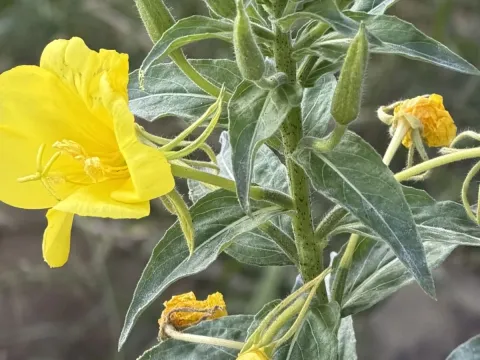
Oenothera elata
Oenothera elata
Oenothera elata seeds should be sown directly into the soil in April or May, once temperatures are sufficiently warm. Winter sowing in late October is also an option, as it provides the necessary stratification for better germination.
What the section contains
Oenothera elata
For early seedlings, seeds are sown in containers during March, maintaining a germination temperature of approximately 20 degrees Celsius. Seedlings require careful handling during transplantation, as their root system is sensitive to disturbance.
The planting depth should be shallow, no more than 0.5–1 cm, as seeds require sunlight to germinate. It is recommended to lightly cover the seeds with fine substrate or sand rather than burying them deeply.
Spacing between plants should be at least 40–50 cm to accommodate the vigorous growth during the second year of vegetation. Overcrowding can lead to diminished flowering and increased susceptibility to fungal diseases.
As a biennial plant, Oenothera elata develops only a basal rosette of leaves in the first year. Significant stem development and flowering occur in the second year, which is a crucial factor in crop rotation planning.
This crop has moderate soil fertility requirements but thrives best in light, well-drained sandy loam or loamy soils. Waterlogging is a major risk factor that can lead to root decay and overall plant failure.
The plant prefers open, sunny areas; shade causes the stems to grow thin and weak, and significantly reduces the intensity of flowering. The crop exhibits high winter hardiness and can withstand considerable temperature fluctuations.
The optimal soil pH for Oenothera ranges from 6.0 to 7.5. In highly acidic soils, it is recommended to incorporate lime or dolomite flour before establishing the plantation to ensure nutrient availability.
Regular watering is essential during the flowering stalk formation and budding phases, although the plant shows good resistance to brief dry spells. Excessive nitrogen fertilization should be avoided as it stimulates foliage growth at the expense of seed quality.
Standard agronomic practices include systematic weeding and cultivation between rows to promote soil aeration. Applying phosphorus-potassium fertilizer complexes significantly improves seed yield and the concentration of bioactive compounds.
The yield of Oenothera elata is primarily measured by the seed harvest, which is highly valued for its gamma-linolenic acid content. Under commercial cultivation, average yields range from 5 to 10 centners per hectare.
Maximum productivity is achieved by maintaining optimal plant density per unit area. Crop success depends heavily on the quality of the starting seed material and effective weed control during the early stages of establishment.
The plant is also valuable for its biomass, which is harvested for pharmaceutical applications. Biochemical profiles can vary based on regional climatic conditions and specific agricultural management strategies.
In intensive farming, regular renewal of the seed stock is recommended to maintain the cultivar's specific traits. Cold-pressed oil yields from the seeds can account for 20–25 percent of their total mass.
Economic profitability increases when processing facilities are located near the collection sites. Additionally, harvesting the flowers for the cosmetic industry provides an extra revenue stream for farm operations.
Powdery mildew is the most common disease affecting Oenothera, particularly during periods of high humidity and temperature fluctuations. Immediate treatment with sulfur-based fungicides is required at the first sign of infection.
Root rot caused by pathogenic fungi typically occurs in heavy or poorly drained soils. Prevention measures involve improving drainage systems and strictly monitoring irrigation schedules to prevent moisture buildup.
Among pests, aphids pose the greatest threat by colonizing young shoots and inflorescence, feeding on cell sap. Control is achieved through the targeted application of systemic or contact insecticides.
Caterpillars of certain moth species may damage leaves and buds, impacting the overall market value of the crop. Regular field scouting and the use of biological control agents are effective for early-stage infestations.
Adhering to crop rotation principles and maintaining spatial isolation from other Onagraceae family members helps to minimize the risk of pest and disease outbreaks within the plantation.
Harvesting is performed when the seed pods have turned brown but before they start to shatter. Mechanical harvesting using combines is the standard practice for large-scale operations.
In smaller plots, manual collection of stalks is acceptable, followed by drying in well-ventilated sheds. It is critical to ensure the harvest remains dry to prevent molding and quality loss.
Seeds must be thoroughly cleaned of plant debris and dried until they reach a moisture level of 8–10 percent. Maintaining this moisture range is essential for long-term storage without compromising seed viability.
To produce high-quality oil, seeds must be stored in cool, dark environments away from direct sunlight. High concentrations of polyunsaturated fatty acids make the seeds prone to oxidation if improperly stored.
Post-harvest plant residue can be shredded and incorporated back into the soil as organic matter, where it decomposes efficiently to enrich the soil profile with nutrients for subsequent crops.