
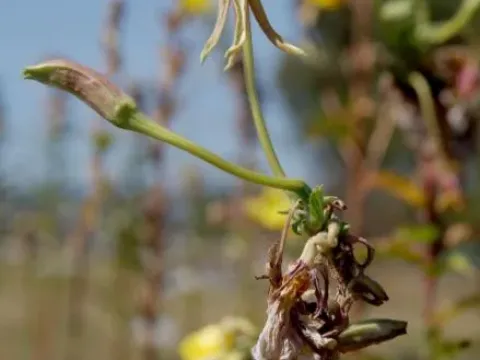
Oenothera jamesii
Oenothera jamesii
Oenothera jamesii, a notable member of the Onagraceae family, is gaining attention as a specialty agricultural crop. Sowing is typically performed in the spring once soil temperatures have consistently reached 10–12 degrees Celsius, ensuring optimal conditions for germination.
What the section contains
Oenothera jamesii
Given the minute size of the seeds, they should be surface-sown or covered with a very light layer of soil, no deeper than 0.5 to 1 cm. Proper soil contact is vital, and light rolling of the seedbed post-sowing is highly recommended to improve moisture capillary action.
In large-scale farming, row spacing is usually maintained at 45–60 cm to provide the necessary space for the plant's robust development during its lifecycle. Proper spacing is crucial to prevent competition for light and nutrients among seedlings.
The first year of growth is dedicated to establishing a strong taproot and a lush basal rosette of leaves. This investment in the root system is what makes Oenothera jamesii particularly resilient to drought conditions in subsequent growing years.
For improved field emergence, growers often use stratified seeds to ensure even germination rates across the entire field. Maintaining adequate surface moisture during the first two weeks post-sowing is essential for the establishment of a uniform crop stand.
This crop thrives in well-drained, sandy loam, or loamy soils with a neutral pH level. It is highly sensitive to waterlogging, so selecting fields with excellent internal drainage is a prerequisite for successful cultivation.
Oenothera jamesii requires full sun exposure to reach its maximum yield potential. Even partial shade can lead to leggy growth, reduced flowering intensity, and a significant decrease in the oil content of the seeds, which is the primary economic driver for this crop.
While the plant is drought-tolerant once established, supplemental irrigation during the critical flowering and seed-set phases is recommended to maximize yield. Proper water management ensures that the plant does not abort its developing pods under heat stress.
Soil fertility management should focus on phosphorus and potassium to strengthen the plants and promote seed quality. Excessive nitrogen should be avoided, as it encourages excessive foliage growth at the expense of seed production, which can also make the plants prone to lodging.
Regular inter-row cultivation is necessary to manage weeds and maintain soil structure. Aerated soil supports the deep taproot system, allowing the plant to remain healthy and productive even during prolonged dry spells typical of its native range.
The primary agricultural output of Oenothera jamesii is its seeds, which are processed to extract oils rich in gamma-linolenic acid. The final yield is influenced by the density of the planting, soil health, and the effectiveness of insect pollination.
Productivity is measured by the quality and mass of the harvested seeds. Consistent agronomic practices, including timely weed control and irrigation, are necessary to achieve optimal economic returns from the crop year after year.
The harvest index depends on the synchronicity of pod ripening. Because flowering occurs over a long period, managing the crop for a concentrated maturity window is a major focus for breeders and agronomists working with this species.
Post-harvest processing is a critical component of the yield equation. Efficient cleaning and drying equipment are required to remove chaff and ensure the moisture content of the seed is stable, preventing spoilage during storage.
The economic success of Oenothera jamesii depends on the global market demand for high-quality botanical oils. Ongoing research into high-yielding varieties aims to make this crop a staple in specialized oilseed production rotations.
Oenothera jamesii is relatively hardy, but it can be susceptible to powdery mildew, especially in areas with high humidity and poor air circulation. Implementing proper spacing and proactive fungicide applications can keep this disease in check.
Pests such as aphids and various weevils can damage the flowering stalks and developing seed pods. Regular field scouting during the bloom phase is vital to identify and address pest outbreaks before they lead to significant economic losses.
Root rot is a common threat in poorly drained soils or fields with a history of intensive cropping without proper rotation. Using a balanced crop rotation cycle helps mitigate the buildup of soil-borne pathogens and preserves soil health.
Weed management is paramount, as invasive species can quickly overwhelm the crop in its early stages of development. Integrating mechanical weeding with targeted chemical applications provides the best defense for the crop during the initial growth phase.
Protecting the crop from viral vectors is also important, as the plant can harbor diseases that affect other agricultural species. Maintaining a clean field perimeter and minimizing the presence of host weeds are effective preventive measures.
Harvesting Oenothera jamesii requires careful timing to balance maximum seed maturity with the prevention of pod shattering. The process typically begins when the majority of the pods turn from green to a light brown color.
A common harvest technique is the swathing method, where the plants are cut and left to dry in windrows before being threshed. This method allows for a more uniform drying process and helps reduce seed losses during the final threshing phase.
When using a combine harvester, the machine settings must be carefully calibrated to avoid crushing the seeds. Adjusting the cylinder speed and the concave clearance is essential for maintaining high seed integrity and overall sample quality.
Once threshed, the seeds should be cleaned immediately to remove dust, stalks, and other debris that can cause heating in storage. Moisture management is crucial; keeping the seed moisture content below 10 percent ensures long-term viability and shelf life.
Proper storage in cool, dry conditions is the final step in ensuring the high quality of the oil extracted from the harvest. Modern agricultural facilities use automated moisture and temperature monitoring to keep the stored seed in optimal condition.