
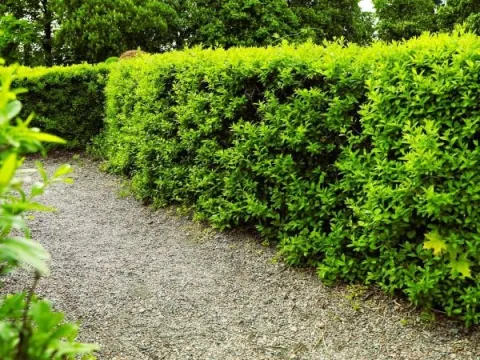
Ibolium Privet
Ligustrum ibolium
Ibolium Privet (Ligustrum x ibolium) is a hardy hybrid deciduous shrub belonging to the Oleaceae family. It is a cross between the common privet and the oval-leaf privet, highly valued by landscape professionals for its rapid growth rate and tolerance to frequent shearing.
What the section contains
Ibolium Privet
The shrub thrives in full sun or partial shade. It prefers fertile, moist, and well-drained soils with a neutral pH. While it can adapt to various soil types, it performs best when provided with consistent moisture and protection from waterlogging during the rainy season.
Regarding climate, this hybrid is quite versatile, exhibiting better cold tolerance than some of its relatives. It is suitable for diverse temperate zones, though in extreme winter temperatures, young branches may suffer from dieback, which is typically resolved through minor pruning in early spring.
Maintenance is relatively straightforward and focuses on structural pruning. To achieve a dense, formal hedge, plants should be sheared regularly throughout the growing season. Proper fertilization with nitrogen-rich blends in spring promotes vigorous growth and enhances leaf density.
The primary use is for hedging and topiary. Due to its dense foliage and pollution resistance, Ibolium Privet is an excellent choice for urban landscapes, acting as a functional sound barrier and a privacy screen. It remains one of the most reliable selections for creating formal architectural elements in gardening.
Common fungal issues, such as powdery mildew, often occur in areas with poor ventilation or high humidity. Managing the density of the hedge through periodic thinning is the most effective preventative measure against these pathogens throughout the growing season.
Pests like aphids and scale insects may occasionally infest new growth. Regular monitoring is essential to ensure plant health. If an infestation occurs, horticultural oils or systemic insecticides are recommended to control the population and prevent premature foliage yellowing.