
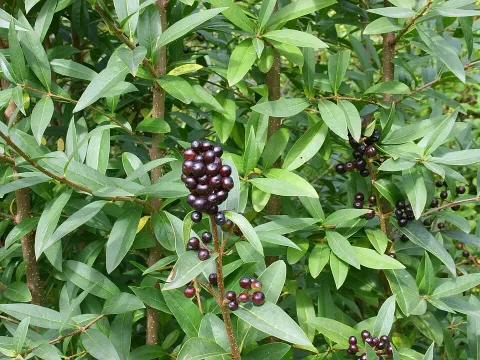
Henry's privet
Ligustrum henryi
Henry's privet (Ligustrum henryi) is an evergreen or semi-evergreen shrub belonging to the Oleaceae family. Originating from central and western China, this plant has gained popularity in temperate regions for its elegant, glossy, dark green foliage and dense, compact growth habit.
What the section contains
Henry's privet
The cultivation requirements focus on providing well-drained, fertile soil with a neutral to slightly alkaline pH. While it thrives in full sun, it is tolerant of partial shade, making it a versatile choice for borders and formal garden designs where varying light conditions may exist.
Regarding climate, this species prefers mild conditions. It is moderately hardy but can be susceptible to damage during extreme cold or harsh, drying winds. Planting in sheltered spots against walls or fences is highly recommended in colder hardiness zones to preserve its evergreen foliage.
Agricultural practices for this shrub involve regular pruning, which is essential for maintaining its form and promoting density. It is highly valued for hedging and topiary, as it responds vigorously to shearing, allowing for precise shaping throughout the growing season.
Water management is critical during the establishment phase. Once mature, Henry's privet exhibits decent drought tolerance, though supplemental watering during prolonged dry spells is advised to keep the foliage vibrant and prevent thinning of the inner canopy.
The main threats to the plant's health include fungal diseases like leaf spot and root rot, which often occur due to poor soil drainage or high humidity around the roots. Improving soil structure and ensuring proper airflow through the branches are primary preventative measures.
Common pests include aphids, scale insects, and spider mites. These pests typically infest new growth and the underside of leaves, leading to stunted development. Integrated pest management, including horticultural oils or systemic insecticides, should be employed at the first sign of infestation.
Environmental stress, particularly waterlogging in clay-heavy soils, serves as a gateway for opportunistic pathogens. Avoiding excessive fertilization during the late autumn prevents soft growth that would otherwise be prone to winter damage and subsequent disease entry.
Regular sanitation, such as removing dead or damaged branches, is crucial to stop the spread of potential infections. Maintaining healthy, vigorous growth through balanced fertilization in early spring provides the plant with natural resilience against minor pest and disease outbreaks.
Overall, by selecting an appropriate planting site and adhering to basic pruning and maintenance schedules, gardeners can ensure that Ligustrum henryi remains a robust and attractive feature of the landscape for many years.