
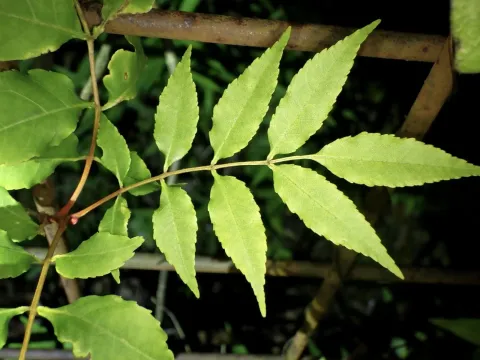
Japanese woolly ash
Fraxinus lanuginosa
The Japanese woolly ash (Fraxinus lanuginosa) is a deciduous tree belonging to the Oleaceae family. It is native to East Asia, primarily found in Japan, where it thrives in mixed deciduous forest environments.
What the section contains
Japanese woolly ash
The species requires well-drained, fertile soil to reach its full biological potential. It performs best in sites with deep soil profiles and adequate moisture supply throughout the growing season.
In terms of light exposure, this tree prefers full sun to partial shade. Proper spacing is essential in plantation forestry or landscape design to ensure optimal air circulation and light penetration into the inner crown.
Botanically, it is identified by the fine, woolly-like pubescence on its young twigs and buds. The pinnately compound leaves develop into a dense, rounded crown, making it a valuable subject for arboriculture.
Cultural practices involve maintaining a consistent moisture level during the first few years of establishment. Mulching is highly recommended to regulate soil temperature and suppress competitive weed growth near the trunk.
The most critical threat to Fraxinus lanuginosa is the emerald ash borer, an invasive beetle that tunnels beneath the bark, disrupting the vascular system and often leading to tree mortality.
Fungal pathogens such as ash dieback can occur, characterized by leaf wilting and branch lesions. These infections are often exacerbated by climate fluctuations and extreme moisture stress.
Defoliating insects can pose seasonal risks, particularly in urban environments where tree stress levels may be elevated due to heat island effects and soil compaction.
Integrated pest management strategies are essential, involving the regular assessment of bark integrity and the monitoring of crown thinning, which are early signs of potential infestation.
Effective management also requires avoiding unnecessary mechanical damage to the trunk during site maintenance, as open wounds serve as entry points for various secondary wood-boring pathogens.