
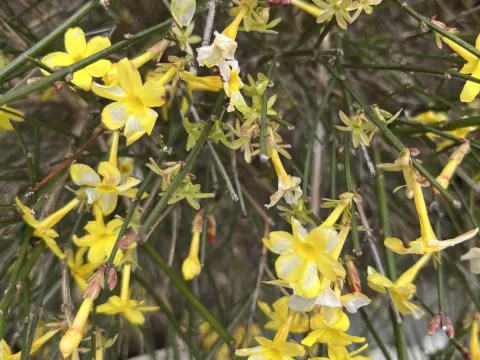
Jasmine
Jasminum L.
Jasmine (Jasminum L.) is a genus of shrubs and vines in the Oleaceae family, widely recognized for its highly fragrant flowers. In agriculture, specific varieties are cultivated for the production of essential oils and other botanical extracts used in the luxury fragrance industry.
What the section contains
 Arabian jasmine
Jasminum sambac (L.) Aiton
Arabian jasmine
Jasminum sambac (L.) Aiton
 Common jasmine
Jasminum officinale L.
Common Jasmine
Jasminum officinale L. x Jasminum polyanthum Franch.
Common jasmine
Jasminum officinale L.
Common Jasmine
Jasminum officinale L. x Jasminum polyanthum Franch.
 Downy jasmine
Jasminum multiflorum (Burm. f.) Andrews
Downy jasmine
Jasminum multiflorum (Burm. f.) Andrews
 Italian jasmine
Jasminum humile L.
Italian jasmine
Jasminum humile L.
 Jasminum beesianum
 Forrest & Diels
Jasminum beesianum
Jasminum beesianum Forrest & Diels
 Jasminum subtriplinerve
 Blume
Jasminum subtriplinerve
Jasminum subtriplinerve Blume
 Pink jasmine
Jasminum polyanthum Franch.
Pink jasmine
Jasminum polyanthum Franch.
 Royal jasmine
Jasminum grandiflorum L.
Royal jasmine
Jasminum grandiflorum L.
 Stephan's Jasmine
Jasminum x stephanense Lemoine
Stephan's Jasmine
Jasminum x stephanense Lemoine
 Wallich jasmine
Jasminum humile L. forma wallichianum (Lindl.) P. S. Green
Wallich jasmine
Jasminum humile L. forma wallichianum (Lindl.) P. S. Green
 Winter jasmine
Jasminum nudiflorum Lindl.
Winter jasmine
Jasminum nudiflorum Lindl.
Jasmine
The plant thrives in warm, temperate to tropical climates, requiring consistent sunlight to promote vigorous flower production. While some species can tolerate light frost, most commercial cultivars require protected environments or mild winters to avoid damage to the vegetative tissue.
Soil quality is paramount for successful cultivation; jasmine prefers well-drained, sandy loam soils that are rich in organic matter. A neutral to slightly acidic pH is ideal, as extreme soil alkalinity can lead to nutrient deficiencies, particularly iron chlorosis, which stunts plant growth.
Agronomic management requires a strategic irrigation schedule to ensure adequate moisture during the growing season while preventing waterlogging, which can cause root rot. Fertilization should focus on balanced NPK ratios, with increased potash levels during the pre-flowering stage to enhance bloom quality.
Propagation is generally performed through stem cuttings to ensure genetic consistency and faster maturation compared to seed-grown plants. Proper spacing is essential to allow for airflow, which reduces the incidence of fungal diseases and facilitates easier access for workers during the harvest period.
The yield of jasmine is primarily determined by the age of the shrubs and the intensity of pruning. Regular pruning of older branches stimulates the growth of young, productive wood, which significantly increases the number of flower buds developed per plant each season.
Harvesting is an exceptionally labor-intensive process, as jasmine flowers must be hand-picked in the early morning hours. Harvesting after sunrise results in a noticeable drop in essential oil content, which directly impacts the profitability and quality of the final floral extract.
Yield stability depends on the health of the root system and the maintenance of soil fertility throughout the long flowering window. A well-managed plantation can remain productive for many years, provided that rejuvenation pruning is performed consistently to manage the canopy structure.
Post-harvest handling is critical; flowers must be kept cool and transported to processing facilities immediately to avoid fermentation. Techniques like solvent extraction are standard practice in the industry to obtain the highly concentrated jasmine absolute used by perfume houses worldwide.
Beyond fragrance, jasmine is a significant commodity in the global tea market. Processing flowers for tea involves precise dehydration or scenting techniques to infuse the tea leaves with the natural aromatic compounds without degrading the structural integrity of the plant material.
Pest management is a fundamental aspect of jasmine agronomy, with aphids and spider mites being the most common threats. These insects can quickly overwhelm a plant, leading to stunted growth and reduced flower quality if they are not monitored through regular field scouting.
Powdery mildew represents a major fungal challenge, especially in humid or densely planted areas where airflow is restricted. Preventive measures include wide planting density and targeted pruning to allow light and wind to penetrate the center of the bushes, keeping foliage dry.
Whiteflies can cause significant damage in greenhouse settings by draining plant sap and promoting the growth of sooty mold. Integrated Pest Management (IPM) strategies, including the use of sticky traps and biological control agents, are preferred over broad-spectrum chemicals.
Root system health is vital, and pathogens like Phytophthora can lead to sudden collapse of the plant. Careful management of water levels and ensuring that soil drainage is optimal are the best defenses against these soil-borne pathogens that thrive in saturated conditions.
Viral infections, characterized by leaf mottling and yellowing patterns, are incurable and require the immediate removal of infected specimens. Strictly enforcing sanitation protocols for all gardening tools is necessary to prevent the mechanical transmission of viruses across the plantation.