
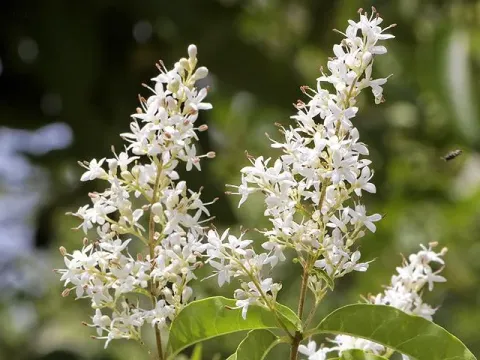
Privet hybrid
Ligustrum hybrids
Ligustrum hybrids belong to the Oleaceae family and are cultivated as popular ornamental shrubs known for their versatility and resilience. These hybrids are the result of selective breeding between various species, primarily native to East Asia, which have been adapted for diverse temperate climate garden applications.
What the section contains
Privet hybrid
The plant thrives in a wide range of soil types, provided they are well-drained and moderately fertile. While it can adapt to various light conditions, it performs best in full sun to partial shade, which encourages denser foliage growth and better overall development of the root system.
Climatic requirements are relatively modest, as these hybrids are generally hardy and can withstand varying weather conditions once established. However, in regions prone to extreme winter cold, young specimens benefit from protective mulching around the root zone to prevent frost damage during their first season.
Agrotechnical maintenance focuses on regular irrigation during dry spells and annual spring fertilization to support rapid growth. The most critical aspect of maintenance is regular pruning, as the plant is remarkably tolerant to shearing, making it an excellent candidate for formal hedges and topiary.
Economically and aesthetically, Ligustrum hybrids are valued primarily for landscaping. They serve as ideal structural plants for borders, privacy screens, and decorative hedging. Their ability to retain their shape and density under frequent pruning makes them a staple in urban and residential garden design.
Common health issues in these shrubs include powdery mildew and leaf spot diseases, which typically occur in overly humid conditions or when plants are overcrowded. Ensuring proper air circulation through strategic thinning and spacing is a key strategy for maintaining a healthy and disease-free shrub.
Major pests affecting this crop include aphids, scale insects, and spider mites. Regular visual inspections are necessary to detect early infestations. If insects are present, prompt application of targeted insecticides or horticultural oils is recommended to prevent significant foliage loss and plant stress.