
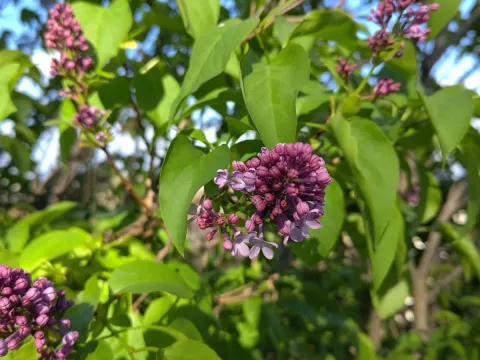
Rhodope lilac
Syringa rhodopea
Rhodope lilac (Syringa rhodopea) is a deciduous shrub species belonging to the Oleaceae family. It is a rare endemic plant native to the Rhodope Mountains, showing a specific adaptation to high-altitude and mountainous environments in the Balkan region.
What the section contains
Rhodope lilac
The plant thrives in well-drained, nutrient-rich soils with a neutral to slightly alkaline pH. For successful cultivation, it requires a sunny location to ensure optimal growth and the development of its fragrant, paniculate inflorescences during the spring months.
Cultural practices include moderate watering, especially during the establishment phase, and mulching to maintain soil moisture. It is a hardy plant that can withstand cold winters, provided it is planted in an area with good air circulation to prevent stagnant humidity.
The shrub features distinctive dark green, opposite leaves and dense clusters of small, fragrant flowers. Its growth habit is typically compact, making it an excellent choice for ornamental gardens where space might be limited but a high aesthetic impact is desired.
In terms of economic and practical use, Syringa rhodopea is primarily valued as an ornamental species. It is utilized by botanic gardens and collectors for conservation purposes and as a high-value element in landscaping for parks and private gardens.
The primary health threats for Rhodope lilac include fungal diseases such as powdery mildew and bacterial blight, which can occur during humid summers. Good garden hygiene, including the removal of fallen leaves, is essential to minimize the risk of infection.
Pests such as lilac borers and leaf-eating caterpillars may occasionally affect the health of the shrub. Monitoring during the active growing season and applying targeted biological or chemical treatments can effectively manage these populations without damaging the plant.