
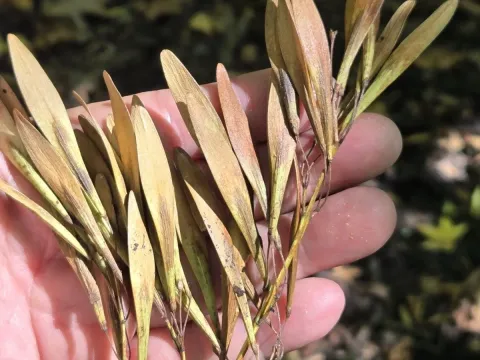
Pumpkin ash
Fraxinus profunda
Pumpkin ash (Fraxinus profunda) is a deciduous tree belonging to the Olive family (Oleaceae). Native to North America, it is uniquely adapted to thrive in river swamps, floodplains, and areas with high water tables where other species fail.
What the section contains
Pumpkin ash
The tree exhibits distinctive botanical traits, including large, pinnately compound leaves and corky, swollen bases of the trunk, which is why it earned its common name. These physical adaptations allow it to survive in saturated anaerobic soil conditions.
From an agronomical perspective, this species requires deep, fertile, and moist soils. It is highly tolerant of occasional flooding, making it an ideal choice for reforestation projects in wetlands and riparian zones.
Cultivation practices involve selecting sites with adequate hydrology. In nurseries, seedlings require consistent irrigation and protection from extreme wind exposure to ensure proper structural development.
Growth rates are generally moderate to fast under optimal conditions, provided the competition from invasive herbaceous plants is strictly controlled during the establishment phase.
The primary threat to Fraxinus profunda populations is the emerald ash borer (Agrilus planipennis), an invasive beetle that has caused widespread mortality throughout the species' natural range.
Fungal diseases, specifically ash dieback caused by Hymenoscyphus fraxineus, pose a significant risk to tree health. This pathogen attacks the vascular system, leading to canopy thinning and branch mortality.
Insects such as leaf miners and scale insects also affect the overall vigor of the trees. While these are usually secondary to the emerald ash borer, they can weaken younger specimens, making them more susceptible to drought and environmental stress.
Management strategies focus on silvicultural thinning, which helps remove heavily infested trees and reduces the overall pressure of pathogens in the stand. Sanitation logging is often practiced to control the spread of pests.
Researchers are actively working on identifying genetically resistant individual trees to ensure the future survival of the species, as currently, few chemical control options are effective on a forest scale.