
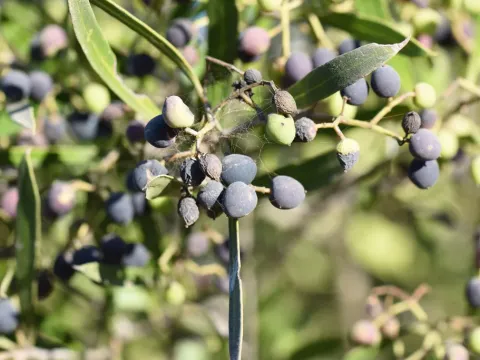
Rough olive
Olea exasperata
The rough olive (Olea exasperata) is a distinct species belonging to the Oleaceae family. It originates from the coastal regions of South Africa, where it has evolved to thrive in sandy, exposed habitats, demonstrating exceptional resilience to salt-laden sea winds.
What the section contains
Rough olive
Botanically, it is classified as an evergreen, dense shrub. Its defining characteristics include a rough, corky bark and sclerophyllous (hard and leathery) leaves, which are structural adaptations designed to minimize transpirational water loss in dry, harsh environments.
In terms of agricultural requirements, this species demands well-drained, sandy, or rocky soil. It is highly intolerant of waterlogging, which often leads to rapid root decline. Proper substrate aeration is a prerequisite for successful establishment and long-term health.
The plant requires full sun exposure to maintain its characteristic compact, dense growth form. It is highly drought-tolerant once established and does not require intensive irrigation, making it suitable for water-wise gardening and arid-land stabilization.
Climate adaptability is limited to Mediterranean-like conditions. While the rough olive can handle significant heat and wind, it is not tolerant of prolonged frost, necessitating careful site selection in temperate zones or container management in colder regions.
The most significant threat to the rough olive is root rot, primarily caused by fungal pathogens in poorly drained soil. Maintaining a strict dry cycle between irrigations is the most effective cultural method to prevent these infections.
Common pests include scale insects, which can colonize the woody stems and foliage. Heavy infestations can lead to canopy dieback and necessitate localized treatment with horticultural oils or approved insecticides.
Spider mites are potential threats, especially if the plant is grown in sheltered or poorly ventilated environments. Maintaining adequate airflow is crucial for deterring these pests and reducing mite pressure on the foliage.
Leaf spot diseases may occur during periods of high humidity. Regular canopy thinning is recommended to improve light penetration and air circulation, which helps dry the foliage quickly after rains.
Integrated pest management protocols should emphasize early detection, as the structural complexity of the dense shrub can make thorough treatment difficult once an infestation becomes well-established.