
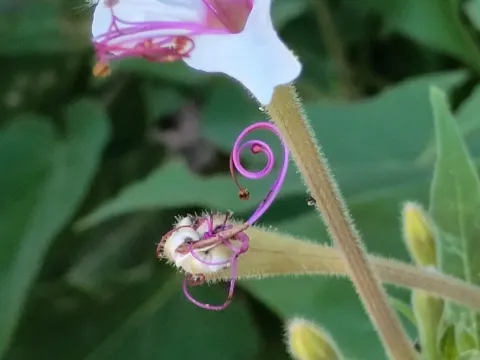
Mirabilis longiflora
Mirabilis longiflora
Mirabilis longiflora is a heat-loving crop, therefore sowing in open ground should be carried out only after the threat of spring frosts has completely passed.
What the section contains
Mirabilis longiflora
The optimal time for sowing is considered to be late May, when the soil at the depth of seed placement warms up to 15-18 degrees Celsius.
To accelerate flowering in regions with a temperate climate, a seedling method is practiced, in which seeds are sown in peat pots during April.
The sowing depth is approximately 1-2 centimeters, as consistent substrate moisture is required for successful germination.
When using the seedling method, hardening of young plants begins two weeks before transplanting, gradually acclimating the crop to direct sunlight.
The plant belongs to the Nyctaginaceae family and naturally occurs in the arid regions of Mexico and the southwestern United States.
For full development, the crop requires well-lit areas, as stems become excessively elongated and flowering intensity drops significantly in shaded conditions.
It prefers well-drained, fertile loamy or sandy loam soils with a neutral to slightly alkaline pH level.
The plant demonstrates high drought tolerance; however, it requires regular yet moderate watering during the active growth phase to produce abundant foliage.
The culture is extremely sensitive to waterlogging and poor drainage, which can cause the tuberous roots to rot.
The primary pest threat to young plantings is aphids, which suck sap from the leaves, causing deformation and stunted overall development.
Under high humidity and poor air circulation, plants may be affected by powdery mildew, appearing as a white coating on the leaf surfaces.
Water stagnation in the soil can lead to root rot caused by pathogenic fungi, making proper drainage control essential for the site.
Control of pests and diseases involves using modern systemic insecticides and fungicides, strictly adhering to recommended application dosages.
Preventative measures include maintaining proper spacing between plants and the timely removal of weeds, which can act as reservoirs for infection.