
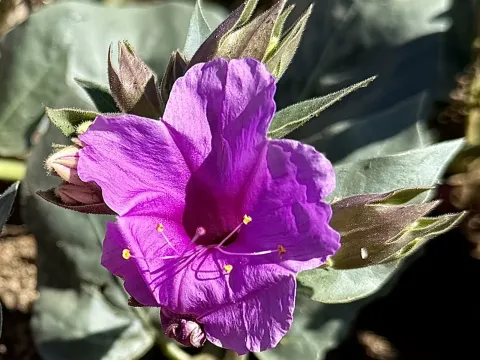
Mirabilis multiflora
Mirabilis multiflora
Sowing Mirabilis multiflora seeds is typically performed in late spring, once the threat of frost has passed and the soil has reached a stable temperature conducive to germination.
What the section contains
Mirabilis multiflora
For direct seeding in the field, it is recommended to prepare the soil by removing debris and ensuring the surface is loose, allowing for easy emergence of the seedlings.
When starting indoors, seeds should be sown in individual pots roughly six to eight weeks before the planned outdoor transplantation to give the plants a head start in the season.
Seeds are usually planted at a depth of about 1 to 2 centimeters; keeping the soil consistently moist until germination is vital for achieving a high success rate.
Thinning is necessary once the seedlings develop their first true leaves to ensure each plant has enough space to develop its characteristic deep root system.
Mirabilis multiflora, commonly known as the Colorado four o'clock, belongs to the Nyctaginaceae family and is highly adapted to arid and semi-arid environments.
The plant thrives in full sun, requiring exposure to direct sunlight for the majority of the day to ensure prolific blooming and healthy vegetative growth.
Soil requirements are relatively minimal; it prefers well-drained, sandy or rocky soils, as it is highly susceptible to root rot if grown in saturated, heavy clay conditions.
This species is exceptionally drought-tolerant once established, requiring deep, infrequent watering rather than frequent light sprinkling, which can weaken the root structure.
It adapts well to alkaline soils and is generally not demanding in terms of fertilization, making it a low-maintenance choice for dryland landscaping or xeriscaping.
The most common threats to Mirabilis multiflora populations are fungal infections resulting from poor drainage, high humidity, or lack of proper air circulation around the foliage.
Powdery mildew represents a significant aesthetic and health challenge, particularly during stagnant weather conditions, covering the leaves in a dense white, powdery film.
Insect pests, such as aphids and spider mites, can become problematic during hot, dry spells, necessitating regular monitoring and appropriate horticultural control measures.
In addition to pests, large herbivores like deer or rodents may occasionally feed on the lush foliage, requiring physical barriers to protect younger, vulnerable plants.
Integrated pest management, including the use of systemic fungicides and horticultural oils, is recommended to keep the plants healthy throughout the growing season.
The primary utility of Mirabilis multiflora lies in its ornamental value, as it serves as a robust perennial that provides continuous color in harsh climates.
Seed harvesting is carried out once the fruits reach maturity, turning dark in color and hardening, which typically occurs in late summer or early autumn.
Post-harvest handling involves drying the seeds in a clean, ventilated area away from direct sunlight to prevent mold and ensure the longevity of the germplasm.
Stored seeds must be kept in cool, dry conditions, preferably in sealed containers, to maintain viability for subsequent seasons of propagation.
The plants contribute significantly to ecological restoration projects, acting as a nectar source for local pollinators while stabilizing soils in degraded landscapes.