
Mirabilis nyctaginea
Mirabilis nyctaginea
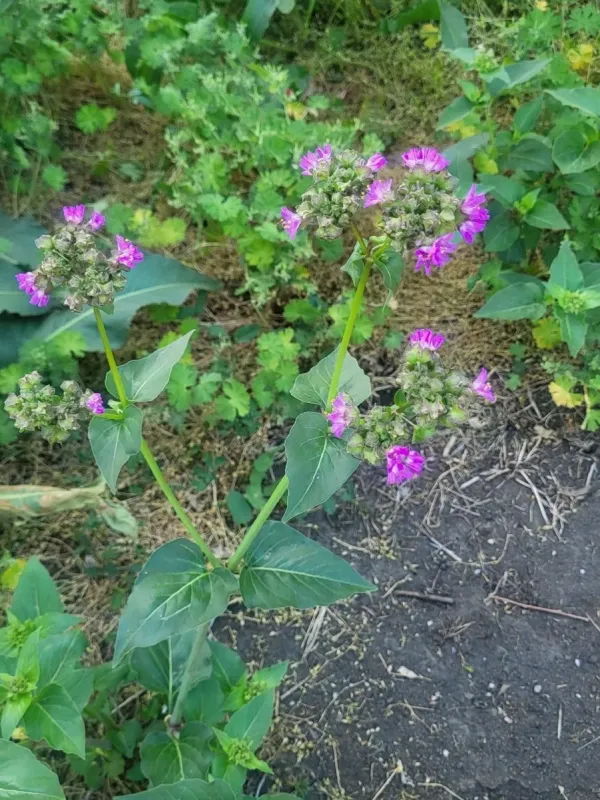
Description
Sowing dates
Mirabilis nyctaginea, commonly known as wild four-o'clock, is a robust herbaceous perennial belonging to the Nyctaginaceae family. The plant is primarily propagated by seeds, which exhibit high environmental adaptability and can remain viable in the soil seed bank for extended periods.
Sowing typically occurs in the spring when soil temperatures reach stable levels. In agricultural fields, it is often treated as an aggressive species that requires efficient management due to its rapid growth rate and ability to colonize disturbed environments effectively.
For research and cultivation purposes, seeds are planted at a shallow depth to encourage germination. The seedlings develop a strong taproot early on, which provides a competitive advantage in securing nutrients and water during the initial stages of development.
The growth cycle is characterized by rapid vegetative expansion, which allows the plant to shade out competing species. Proper spacing is essential to manage its density and prevent the plant from becoming overly invasive in nearby cultivated crop areas.
The persistence of the plant is further enhanced by its ability to store energy in a thickened, deep-reaching root system, allowing it to recover quickly even after mechanical disturbance or mowing.
Growing requirements
Mirabilis nyctaginea thrives in environments with high levels of direct solar radiation. Its physiological response to light indicates that peak biomass production is achieved in full-sun conditions, as shading significantly restricts its development.
The plant demonstrates remarkable soil versatility, growing well in various textures ranging from sandy soils to heavy clay. However, well-drained soil profiles are preferred to support the oxygen requirements of its extensive root structure.
Regarding moisture, the species displays moderate drought tolerance once established. Nevertheless, consistent water availability during the peak vegetative phase ensures optimal growth and prevents the hardening of the stem tissues.
Climatic adaptability is one of the key strengths of this species. It is well-suited to regions with warm, long summers, where the long photoperiod supports sustained photosynthetic activity throughout the late spring and summer months.
Agronomic management should include regular mechanical cultivation between rows to disrupt the root connectivity of individual plants. This technique also improves soil aeration, which is beneficial for the overall health and vigor of the root system.
Main diseases and pests
Fungal infections remain the most significant threat to Mirabilis nyctaginea, particularly under high-humidity conditions. Powdery mildew is frequently observed, manifesting as a fine white dust on the upper surface of the leaves.
Root rots caused by soil-borne pathogens are a concern in poorly drained fields. These conditions can lead to the wilting of the plant and eventual senescence of the foliage, significantly reducing the vigor of the plant population.
Pest pressure is primarily driven by sap-sucking insects, such as aphids and spider mites. These pests congregate on the undersides of leaves and on developing inflorescences, extracting nutrients and causing premature leaf drop.
Integrated pest management strategies are recommended, emphasizing the use of cultural controls like proper spacing and debris removal to reduce the inoculum load of diseases and the habitat for pests.
- Use of systemic fungicides if fungal symptoms become widespread.
- Implementation of targeted insecticidal sprays during peak pest activity.
- Destruction of infected plant materials to minimize seasonal disease carry-over.