
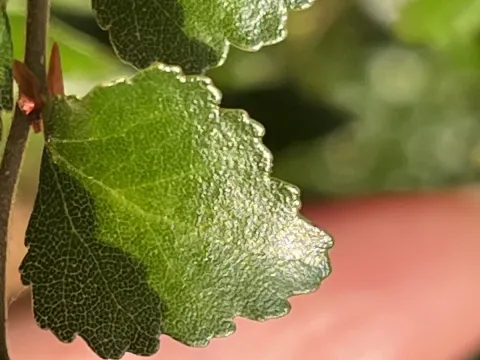
Nothofagus
Nothofagus
Nothofagus, commonly known as southern beech, is a genus of trees that belongs to the Nothofagaceae family. Historically grouped with Fagaceae, it is now recognized as a distinct taxonomic entity native to the Southern Hemisphere.
What the section contains
 Hard beech
Nothofagus truncata
Hard beech
Nothofagus truncata
 Menzies' beech
Nothofagus menziesii
Menzies' beech
Nothofagus menziesii
 Mountain beech
Nothofagus cliffortioides
Mountain beech
Nothofagus cliffortioides
 Nothofagus alessandrii
Nothofagus alessandrii
Nothofagus alessandrii
 Nothofagus alpina
Nothofagus alpina
Nothofagus alpina
 Nothofagus apiculata
Nothofagus apiculata
Nothofagus apiculata
 Nothofagus betuloides
Nothofagus betuloides
Nothofagus betuloides
 Nothofagus cunninghamii
Nothofagus cunninghamii
Nothofagus cunninghamii
 Nothofagus dombeyi
Nothofagus dombeyi
Nothofagus dombeyi
 Nothofagus glauca
Nothofagus glauca
Nothofagus glauca
 Nothofagus leonii
Nothofagus leonii
Nothofagus leonii
 Nothofagus moorei
Nothofagus moorei
Nothofagus moorei
 Nothofagus nitida
Nothofagus nitida
Nothofagus nitida
 Nothofagus solandri
Nothofagus solandri
Nothofagus solandri
Nothofagus
Its natural range includes countries such as Chile, Argentina, Australia, New Zealand, and New Caledonia. The tree thrives in temperate, maritime climates characterized by cool summers and high annual rainfall.
For optimal growth, Nothofagus requires deep, fertile, and well-drained soils with an acidic to neutral pH. Proper soil structure is essential, as the species is highly sensitive to waterlogging, which can cause root decay.
Agrotechnical practices focus on providing protection against strong, desiccating winds that can impair foliage development. Young saplings require careful monitoring of soil moisture levels to ensure successful establishment.
Propagation is typically achieved through seeds, which often benefit from cold stratification to improve germination rates. Vegetative propagation, including cuttings, is also utilized in specialized forestry nurseries.
The primary economic use of Nothofagus is in the timber industry. The wood is highly valued for its durability, attractive grain patterns, and excellent mechanical properties, making it ideal for furniture and cabinetry.
Timber yield varies depending on the specific species and local growing conditions. In intensive forestry plantations, species like Nothofagus dombeyi are managed for high-quality sawlogs, supporting sustainable timber production.
The wood's uniform texture and ease of machining have established its reputation as a premium material for interior flooring and joinery. Its consistent quality allows it to compete with northern hemisphere hardwoods.
Beyond timber, certain species of Nothofagus are grown for ornamental purposes. Their elegant foliage and unique branching patterns make them popular choices for large-scale landscaping in regions with suitable climates.
Effective forest management involves careful rotation planning to balance timber production with ecosystem preservation. Long-term productivity is maintained through periodic thinning and active forest health monitoring.
The health of Nothofagus plantations is frequently challenged by fungal pathogens, particularly in areas with poor drainage or stagnant air. Stem and root rots are common issues that can significantly degrade timber quality.
Insect pests represent another major threat, with leaf-eating beetles and wood-boring insects causing potential damage to both nursery stock and mature trees. These pests can cause significant growth stunting.
Biosecurity is a critical aspect of Nothofagus cultivation, especially when introducing the species to new geographic regions. Preventing the spread of invasive pests is vital to maintaining the resilience of the plantations.
Preventive measures include maintaining proper spacing between trees to encourage airflow and reduce the incidence of fungal outbreaks. Early detection through regular field inspections is necessary for effective control.
When pest or disease outbreaks occur, integrated pest management strategies should be applied. This includes targeted sanitary logging and the removal of infected material to protect the overall health of the forest stand.