
Nothofagus nitida
Nothofagus nitida
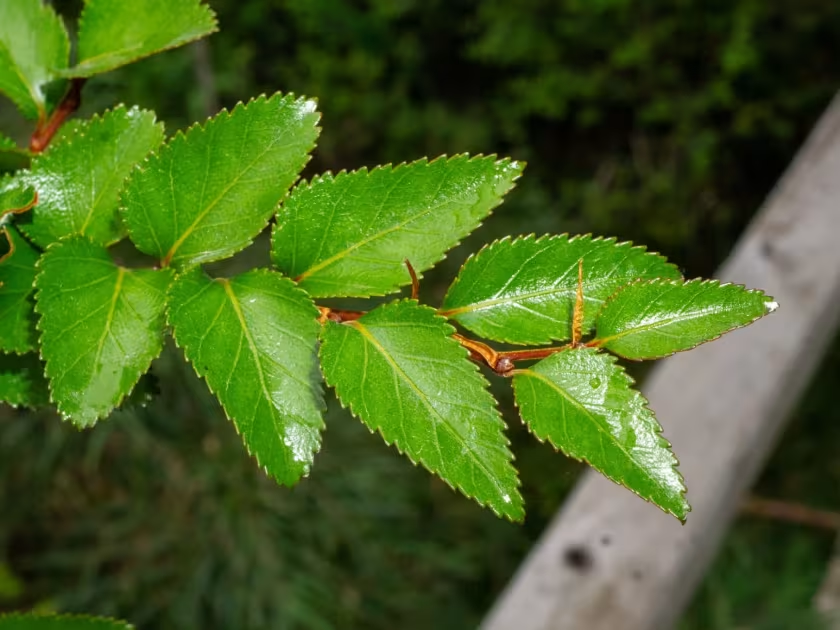
Description
Growing requirements
Nothofagus nitida is an evergreen tree species belonging to the Nothofagaceae family. It is a dominant component of the temperate rainforests, characterized by its glossy, dark green foliage and a robust, dense canopy structure that provides significant ecological benefits.
Native to the humid regions of southern Chile and Argentina, this species thrives in climates with high annual precipitation and mild seasonal temperature variations. It is strictly adapted to areas where drought stress is minimal and ambient humidity remains high throughout the year.
The agronomic requirements for Nothofagus nitida involve deep, well-drained, and slightly acidic soils. High organic matter content is essential for early establishment, and the site must prevent waterlogging to avoid root rot issues common in sensitive evergreen species.
Climatic adaptability is restricted to zones that do not experience deep frost. Protection from cold, desiccating winds is necessary during the seedling phase to ensure the development of a healthy, symmetrical trunk and to prevent foliage burn.
Cultural practices include periodic soil testing to maintain nutrient availability and ensure the pH remains within the preferred range. Providing a sheltered environment is often the most critical factor for successful plantation establishment in non-native habitats.
Harvesting
Nothofagus nitida is primarily harvested for its high-quality timber, which is valued for its density, uniform texture, and aesthetic appeal. The wood is widely utilized in the manufacturing of high-end furniture, fine woodworking, and architectural interior elements.
Industrial timber production requires careful management of growth cycles to achieve the desired log dimensions. Strategic pruning and thinning are implemented to improve the quality of the bole, resulting in higher-grade timber suitable for demanding market applications.
Beyond timber, the species is employed in landscape architecture and carbon sequestration projects. In suitable temperate climates, it serves as an ornamental specimen, contributing to biodiversity and structural diversity in parklands and large-scale botanical gardens.
Harvesting operations follow sustainable forestry guidelines, emphasizing selective extraction to ensure continuous canopy cover and ecosystem resilience. This approach mitigates soil erosion risks, which is particularly important given the moisture-rich habitats where the tree grows.
Post-harvest processing involves precision drying to stabilize the wood’s moisture content, preventing warping or splitting in the finished product. Proper storage and seasoning are vital to maintaining the reputation of Nothofagus timber as a premium material in international trade.