
Nothofagus betuloides
Nothofagus betuloides
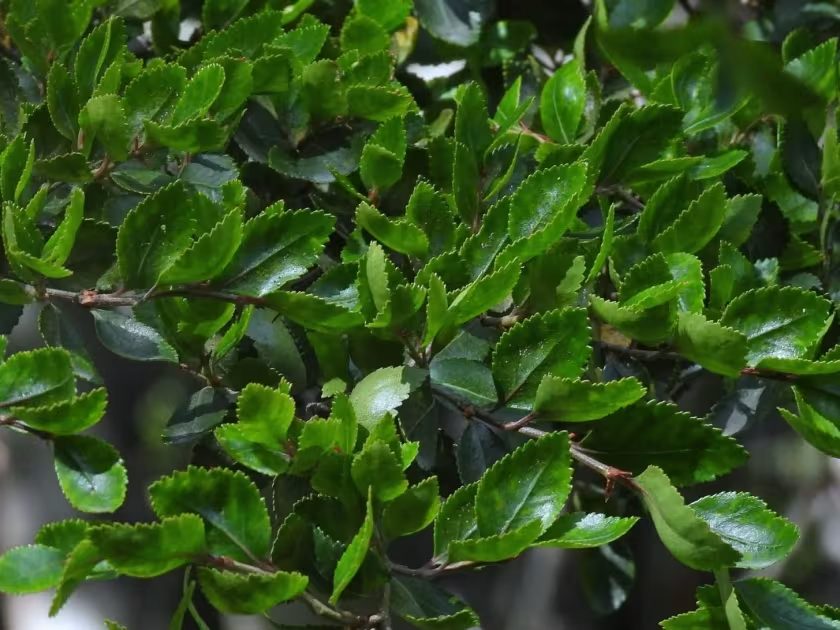
Description
Growing requirements
Nothofagus betuloides, commonly known as the Magellan's beech or evergreen beech, is a prominent species within the Nothofagaceae family. It is an evergreen tree capable of forming vast, dense forests in its native environment.
Originating from the southern regions of South America, specifically Patagonia and Tierra del Fuego, this species is well-adapted to cool, humid climates and strong, prevailing winds.
The tree thrives in moist, well-drained, and nutrient-rich soils. It prefers slightly acidic substrates, which are typical of its natural range, and it requires consistently available soil moisture to remain healthy.
Climate requirements for this species include mild summers and temperate winters. While it is hardy, the tree performs best in regions where extreme temperature fluctuations are minimal, ensuring steady year-round growth.
Agronomic management involves selecting appropriate planting sites that mimic its natural habitat. Regular maintenance, including the provision of mulch and protection from harsh early-season frost, is essential for sapling development.
Yield
The primary economic value of Nothofagus betuloides lies in its timber production. The wood is renowned for its durability, fine texture, and high density, making it a sought-after material for construction and carpentry.
Industrially, the wood is used for high-quality furniture making, interior finishing, and structural applications. Its stability and resistance to warping contribute to its popularity among craftsmen.
Beyond its timber, the tree serves a significant ornamental role. Its evergreen foliage and unique architectural shape make it an excellent choice for large-scale landscaping and botanical park developments.
The growth rate of the southern beech is moderate. Sustainable forest management practices are employed to ensure consistent yields while maintaining the structural integrity of the surrounding ecosystems.
Furthermore, the species provides important ecological benefits, including soil stabilization on steep terrains and the provision of essential habitats for local fauna, contributing to the biodiversity of southern forests.
Main diseases and pests
Common health issues in Nothofagus betuloides are largely related to fungal pathogens, particularly in areas with poor soil drainage. Root rot is a significant concern if the soil remains waterlogged for prolonged periods.
Pest management focuses on mitigating the impact of leaf-eating insects and boring pests that can damage the tree's vascular system. Integrated pest management (IPM) strategies are recommended for plantation health.
Young trees are susceptible to extreme winter conditions, particularly when accompanied by strong, desiccating winds. Providing windbreaks during the initial growth phase is a crucial agronomic intervention.
Soil quality degradation, specifically compaction caused by machinery, can negatively affect the tree's health by hindering root oxygen uptake. Maintaining proper soil structure is vital for long-term viability.
Disease prevention also includes strict phytosanitary measures when introducing the species to new areas to avoid the spread of soil-borne pathogens and ensuring that the selected site meets all hydrological requirements.